
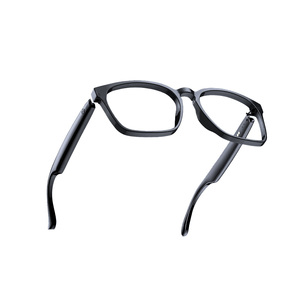
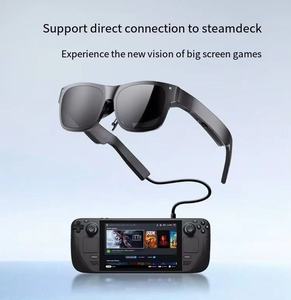
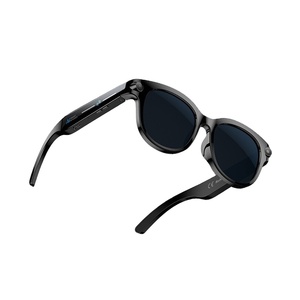
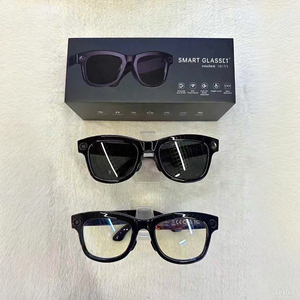
Executive Analysis: Prescription Audio Eyewear OEM/ODM Manufacturing for the Nagoya & Chubu Optical Corridor
The convergence of precision ophthalmic optics and open-ear directional acoustics represents one of the fastest-growing segments within Japan's premium wearable technology sector. In particular, the Nagoya metropolitan area—serving as the economic engine of Aichi Prefecture and the broader Chubu industrial highway—presents a unique juxtaposition of high-tech automotive innovation, extensive rail transit commuting patterns, and an uncompromising consumer standard for optical hardware craftsmanship. As global and regional brand owners search for top trusted prescription audio sunglasses manufacturers & manufacturer partners in the Nagoya market, understanding the underlying acoustic engineering, lens glazing adaptability, industrial ergonomics, and localized regulatory compliance frameworks is vital for securing sustainable market dominance.
This whitepaper provides a comprehensive architectural and commercial breakdown for enterprise procurement directors, regional optical chain buyers, and consumer electronics distributors looking to contract high-volume OEM/ODM manufacturing of smart audio sunglasses customized for the Japanese retail ecosystem.
Dipole Acoustic Cancellation
Integrated dual micro-speakers utilize reverse-phase wave projection to direct sound directly into the external auditory canal while canceling lateral spillover by up to 28dB on quiet Japanese commuter trains.
JIS T 7331 Optical Glazing
Frame cold-insertion bevels are CNC-machined to hold strict Japanese Industrial Standards (JIS T 7331) for single-vision, progressive, photochromic, and high-index prescription optical lenses.
MIC TELEC & VCCI Certified
Pre-validated RF shielding and antenna layouts guaranteeing 100% compliance with Japan Ministry of Internal Affairs and Communications (MIC) TELEC radio wave regulations.
1. Regional Intent & Market Dynamics in Nagoya & Aichi Prefecture
Analyzing search intent and B2B buyer behavior within Nagoya reveals a sophisticated customer base. Nagoya is not merely a commercial retail center like Tokyo’s Shibuya or Osaka’s Shinsaibashi; it is the global headquarters hub of industrial giants (such as Toyota, Denso, and Mitsubishi Heavy Industries). Consequently, the demographic in the Nagoya market demands high engineering integrity, flawless functional durability, and subtle, executive-class aesthetics.
Local optical buyers operating across major Nagoya commercial centers—such as the Sakae underground shopping arcades, Meieki (Nagoya Station district), and Kanayama transit hubs—report four distinct end-user requirements driving prescription audio eyewear adoption:
- Discreet Public Transit Audio: Passengers riding the Nagoya Municipal Subway (Higashiyama and Meijo lines) or the Meitetsu regional rail require personal audio that prevents sound leakage. Conventional open-ear speakers radiate acoustic energy in all directions; specialized manufacturers must integrate micro-dipole phase cancellation to contain sound within a 30-centimeter perimeter.
- Automotive & Industrial Commuting: Aichi Prefecture has the highest vehicle ownership rates among major Japanese urban centers. Commuters navigating the Nagoya Expressway or driving to manufacturing facilities in Toyota City require Bluetooth-enabled audio sunglasses that deliver clear turn-by-turn GPS navigation and voice calls without blocking ambient traffic noise.
- All-Weather Outdoor Endurance: Cyclists along the Shonai and Tempaku river routes, as well as marine sports enthusiasts near Ise Bay, require frames with IPX5 water resistance, anti-fog lens ventilation, and high-impact polarized protection capable of withstanding intense UV glares.
- Full Ophthalmic Compatibility: Japanese wearers exhibit a high rate of myopia and astigmatism, making non-prescription "plano" smart glasses insufficient for daily use. Frames must support lab-glazed prescription lenses ranging from -8.00D high-index single vision to complex multi-focal progressives without distorting the sensitive acoustic housing within the temples.
2. OEM Engineering Architecture: Audio Acoustics & Optical Integration
To deliver a superior product that outperforms mass-market wearables, top-tier audio sunglasses manufacturers employ an integrated engineering approach combining electro-acoustics, polymer micro-molding, and ophthalmic lens fitting.
A. Directional Open-Ear Acoustic Architecture
Traditional Bluetooth sunglasses often rely on simple speaker drivers housed within the temple arms, firing sound downwards toward the cheekbone. This primitive design results in muddy frequency response and excessive sound leakage. Our manufacturing framework incorporates customized balance-armature and dynamic transducer units aligned to dual acoustic ports:
1. The Primary Acoustic Port directs sound pressure waves directly toward the wearer's tragus and auditory canal.
2. The Secondary Anti-Phase Port emits an inverted acoustic signal tuned to destructive interference frequencies, neutralizing sound waves traveling outwards into the ambient environment.
This dual-port configuration ensures crisp treble, clear vocal intelligibility for hands-free phone calls, and acoustic privacy even in quiet office environments or Japanese library spaces.
B. Precision Lens Glazing & Frame Thermodynamics
The primary point of failure for low-tier smart eyewear is frame distortion during lens glazing. Standard optical technicians apply heat guns to soften plastic frames when inserting prescription lenses. However, heat application near sensitive Bluetooth chips, lithium-polymer batteries, and flex-PCB wiring can permanently damage electronics or compromise liquid seals.
To eliminate this risk, our prescription audio sunglasses frames are engineered with ultra-stable materials such as Swiss Grilamid TR90 combined with CNC-machined Japanese Acetate rim inserts. The lens bevel groove is precision-molded with a 110-degree V-groove standard that accommodates cold-snap lens insertion. Optical labs in Nagoya can easily edge and glaze lenses—including High-Index 1.60, 1.67, 1.74, Polycarbonate, Trivex, photochromic (Transitions®), and polarized sun lenses—without applying heat to the electronic temples.
Manufacturing Technical Specification Matrix
| Engineering Specification | Standard Commercial Grade | Nagoya Enterprise Grade (Our OEM Standard) |
|---|---|---|
| Frame Polymer Material | Recycled ABS / Standard PC | Swiss Grilamid TR90 & Japanese High-Density Acetate |
| Rx Glazing Tolerance | ± 0.50 D (Risk of frame warp) | ≤ ± 0.12 D (Cold-insertion V-bevel standard) |
| Acoustic Isolation | Single port (High leakage > 45dB) | Dual-Port Phase Cancellation (< 18dB leak at 70% vol) |
| Ingress Protection | IPX4 (Basic splash) | IPX5 Certified Nano-coated Electronic Housing |
| Wireless Transceiver | Generic Bluetooth 5.0 | Qualcomm® QCC Series Bluetooth 5.3 Low-Latency SoC |
| RF Compliance | FCC / CE Only | MIC TELEC (Japan), VCCI Class B, CE, FCC, RoHS |
| Battery Architecture | Single temple 80mAh cell | Dual-Balanced 110mAh (Up to 8h active play / 20h standby) |
3. Localized Application Scenarios Across Greater Nagoya
To successfully market prescription audio sunglasses in the Chubu region, OEM branding must align with real-world local usage scenarios. The following field application profiles highlight how our engineered frames solve daily pain points for Nagoya residents:
Scenario A: The Chubu Industrial Expressway Commute
An automotive systems engineer driving daily between Nagoya city center and Toyota City requires clear GPS turn-by-turn navigation alerts. Wearing traditional noise-canceling earbuds while driving violates Japanese road safety laws (Road Traffic Act Article 71). Audio sunglasses provide crystal-clear voice instructions while leaving both ears completely open to emergency sirens, horn alerts, and ambient vehicle acoustics.
Scenario B: Sakae & Meieki Executive Work-Transit
A business consultant navigating meetings between Midland Square (Meieki) and the Sakae business district takes multiple conference calls while walking through crowded pedestrian corridors. Integrated dual-beamforming microphones filter out wind noise and urban traffic rumble, allowing hands-free call clarity without pulling out a smartphone screen.
Scenario C: Coastal & Mountain Outdoor Recreation
Weekend cyclists riding around the Chita Peninsula or trekking the Suzuka Mountain passes experience rapid light shifts and heavy perspiration. Polarized UV400 lenses block blinding asphalt reflection, while the IPX5 water-resistant housing prevents sweat or sudden coastal rain from penetrating the acoustic cavity.
4. Industry Trends & Supply Chain Dynamics in the Japanese Market
The Japanese optical landscape is undergoing a structural shift. Traditional eyewear retailers are seeking higher-margin tech-integrated products to attract younger demographics, while consumer tech brands are entering the optical space to build sticky hardware ecosystems. Key industry trends include:
1. Transition from Standalone Gadgets to Everyday Medical-Grade Eyewear
Early smart glasses iterations failed because they looked like bulky tech prototypes. Modern Japanese buyers demand frames that look indistinguishable from luxury fashion frames crafted in Sabae (Fukui Prefecture). Manufacturers must deliver slim temple profiles (under 4.5mm at the ear rest) and balanced weight distribution (under 30 grams total frame weight).
2. Insurance & Flexible Spending Account (FSA/HSA) Compatibility
As smart glasses transition into true prescription medical devices, end-users frequently seek insurance reimbursement or use health savings options for their prescription lenses. OEM suppliers must provide precise technical documentation, lens material certifications, and itemized billing codes that optical retailers can hand to end customers.
3. Demand for Turnkey OEM/ODM White-Label Programs
Nagoya-based optical chains and brand owners require flexible OEM partners who can deliver end-to-end customization. This includes custom branding on inner temple prints, localized packaging in Japanese, customized companion app SDKs, and pre-certified TELEC radio testing so products can be imported directly through the Port of Nagoya or Chubu Centrair International Airport (NGO) without regulatory customs holds.
5. Corporate Competence: Why Partner with Our Manufacturing Facility
As a global leader in smart wearable development, our manufacturing facility merges precision optical tooling with advanced wireless electro-acoustics. When supplying regional distributors and retail partners in Nagoya, we deliver distinct industrial advantages:
- Vertical In-House Production: From mold design and SMT circuit board mounting to acoustic chamber assembly and laser prescription edging, all manufacturing processes are conducted under ISO 9001 and ISO 13485 (Medical Devices) certified cleanrooms.
- Rigorous Environmental & Quality Control: Every production batch undergoes 100% automated acoustic frequency sweeps, IPX5 jet spray verification, hinge flex endurance testing (exceeding 20,000 opening/closing cycles), and thermal shock testing (-20°C to 65°C).
- Complete Telecommunications Pre-Certification: We maintain direct compliance partnerships with TELEC testing labs, ensuring all Japanese radio wave frequency allocations (2.4GHz band) are fully certified with official MIC certification stickers applied to every box.
- Rapid Freight & Chubu Logistics Alignment: Leveraging streamlined export routes into the Port of Nagoya and direct air cargo into Centrair (NGO), we offer reliable 7-to-14 day bulk shipment turnarounds with full customs clearance documentation.