Explore our flagship OEM/ODM production SKUs featuring integrated AI translation, open-ear acoustic engineering, Micro-OLED spatial displays, and precision prescription optical frames.
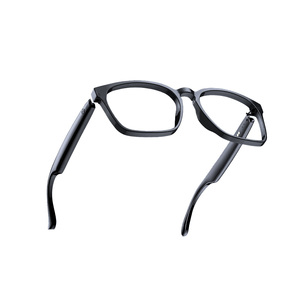
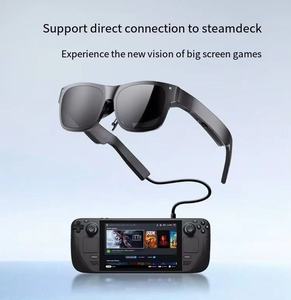
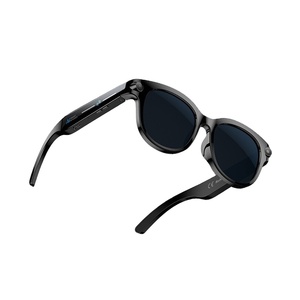
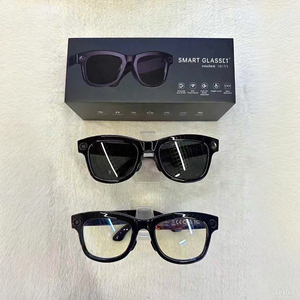
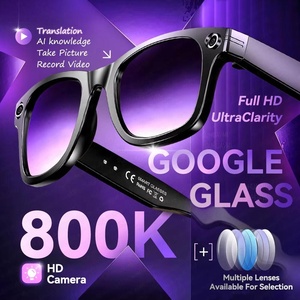
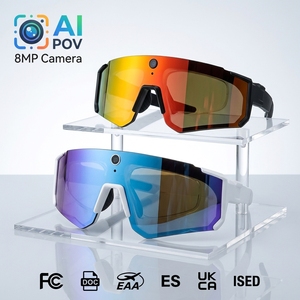
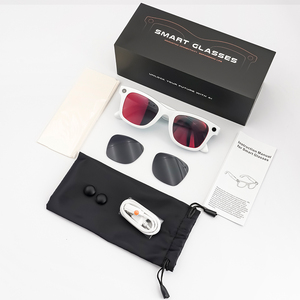
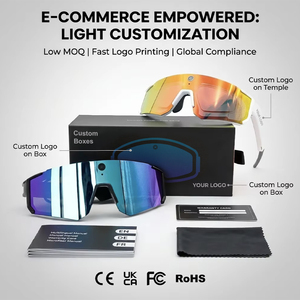
An authoritative technical analysis of how top-tier custom eyewear factories integrate electro-acoustics, spatial displays, and precision optical rim production for global brands.
Modern custom eyewear manufacturing has evolved beyond traditional cellulose acetate milling and injection-molded TR90 frames. In today’s smart wearable ecosystem, premier OEM/ODM facilities must master the convergence of optical ergonomics, micro-electronics integration, and acoustic dipole tuning.
When selecting a custom eyewear factory, brand owners must scrutinize the manufacturer’s internal Surface Mount Technology (SMT) capabilities, micro-coaxial cable routing techniques through flexible hinges, and automated optical alignment systems. Achieving a total frame weight of under 25 grams requires precise wall-thickness optimization (down to 1.2mm in structural acetate sections) without sacrificing structural integrity under drop-impact testing.
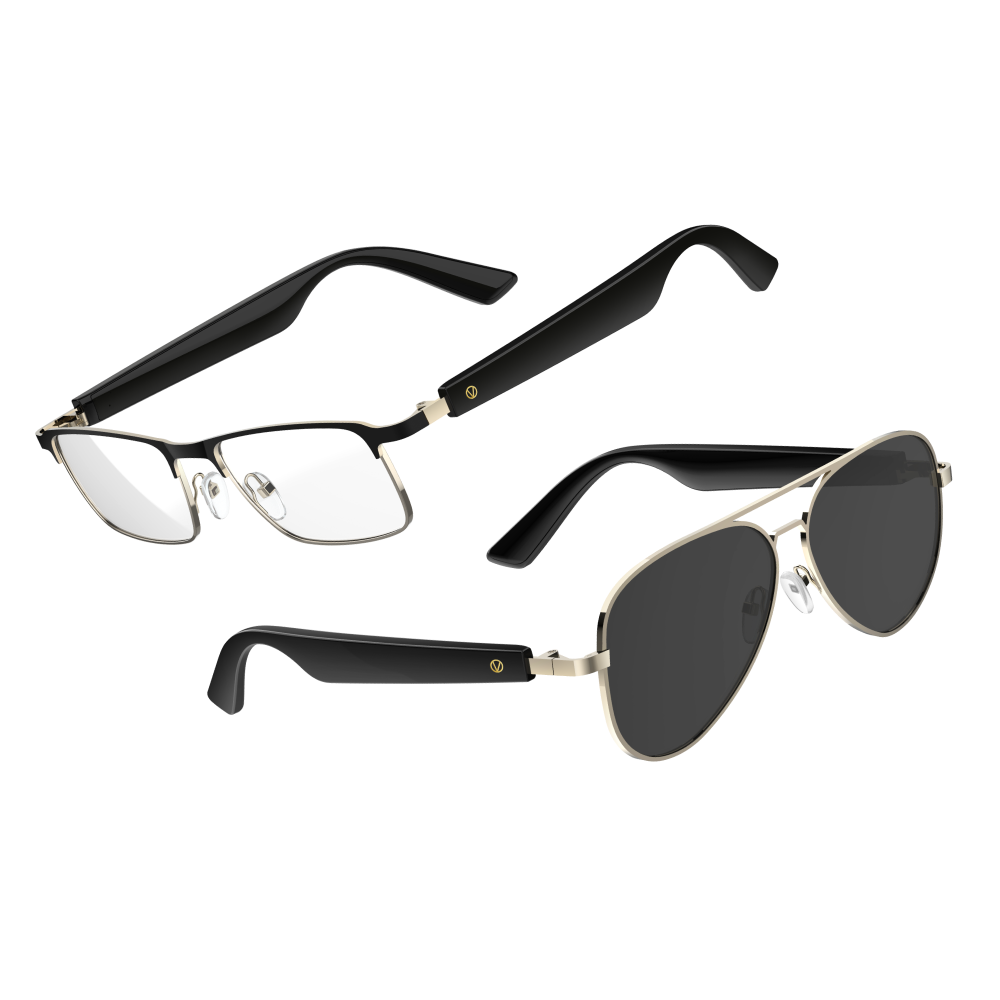
Standard eyewear suppliers often fail when integrating electronic components because conventional frame production permits thermal expansion tolerances of ±0.3mm. In smart eyewear manufacturing, circuit board flexure mandates strict dimensional stability tolerances below ±0.05mm. Factories operating under ISO 9001 and ISO 13485 (Medical Optical Devices) standard protocols utilize climate-controlled cleanrooms for optical engine assembly, drastically reducing yield loss from dust contamination.
From rapid prototyping to mass optical glazing, our integrated manufacturing lines ensure flawless quality, regulatory compliance, and rapid market deployment.
Our in-house toolmakers utilize multi-axis CNC machines to create high-durability steel molds capable of over 500,000 injection cycles. We provide comprehensive Design for Manufacturability (DFM) reports within 48 hours for bespoke frame geometries.
Utilizing micro-directional speakers integrated into the temple arms, our acoustic engineers calibrate frequency response curves specifically for vocal clarity in phone calls, navigation prompts, and AI assistant feedback.
We build high-brightness AR micro-displays capable of rendering 1080p field-of-view projections. Precise optomechanical mounting ensures perfect inter-pupillary distance (IPD) alignment across various face shapes.
Every frame is certified prescription-ready. Our automated optical edging lab glazes anti-reflective, blue-light blocking, photochromic (transition), and polarized sun lenses compliant with ANSI Z80.1 and ISO 12870 standards.
Through nano-coating deposition and ultrasonic sealing around battery wells and acoustic ports, our smart eyewear withstands intense sweat, heavy rain, and outdoor sport usage without internal corrosion.
We empower enterprise clients with customizable BLE SDKs supporting voice assistant triggers, ChatGPT-4 vision streaming, real-time 20+ language translation services, and gesture control panel integration.
Analyzing the interaction points that make custom smart eyewear intuitive for consumer retail, sports, enterprise maintenance, and remote assistant scenarios.

Enterprise users require reliable hands-free controls that function flawlessly in real-world conditions. Our custom temple architecture embeds dual capacitive touch strips capable of registering multi-tap and slide inputs even when wearers are wearing work gloves.
Custom audio eyewear must overcome background wind noise during cycling or ambient factory machinery drone during enterprise tele-support. Our proprietary dual-microphone array isolates vocal frequencies while subtracting low-frequency rumble, delivering crystal-clear call intelligibility.
Combined with Bluetooth 5.3 ultra-low latency protocols, custom eyewear built in our manufacturing facilities ensures continuous connectivity up to 15 meters from the host phone or mobile terminal.

A detailed hardware comparison table for procurement teams evaluating custom smart glasses and premium optical frame manufacturing parameters.
| Specification Parameter | Smart Audio Eyeglasses | AI Vision & Camera Eyewear | AR Micro-OLED Smart Glasses |
|---|---|---|---|
| Total Frame Weight | 25g - 28g (Rx Ready) | 32g - 36g | 45g - 52g |
| Optical Lens Compatibility | Single Vision, Progressive, Blue Light, Photochromic | Polarized Sun, Plano, Prescription Glazed | Micro-OLED Prism/Waveguide Optical Engine |
| Acoustic Architecture | Dual Directional Speakers + Dipole Cancellation | Integrated Speaker + Noise Reduction Mic | Dual High-Fidelity Spatial Audio Speakers |
| Battery & Standby Time | Up to 20 Hours Standby / 5 Hrs Playback | Up to 16 Hours Standby / 90 Min Video | Continuous Type-C Tethered / 4 Hrs Battery Case |
| Charging Mechanism | Magnetic Snap-Lock Dock | Magnetic 2-Pin High Speed Charger | USB-C DisplayPort / Magnetic Case |
| Ingress Protection | IPX5 Sweat & Water Resistant | IPX4 Weatherproof | IP54 Dust & Splash Proof |
| Factory Certification | ISO 9001, CE, FCC, RoHS, REACH | ISO 9001, CE, FCC, TELEC, UN38.3 | ISO 13485, CE, FCC, RoHS, FDA Class I |
Essential strategic insights for brand managers, optical distributors, and private-label buyers preparing for the next decade of intelligent eyewear evolution.
The market demand is rapidly shifting from basic Bluetooth audio frames toward camera-enabled AI wearable platforms. Factories capable of co-packaging micro camera sensors (such as 8MP 1080p stabilized modules) with low-power neural processing units (NPUs) will dominate the custom OEM sector. Future optical frames will perform real-time text recognition, sign translation, and spatial contextual awareness via cloud LLMs like ChatGPT-4o and Claude 3.5.
Regulatory mandates across North America and the EU (such as the EU Ecodesign Regulation) are forcing custom eyewear factories to abandon petroleum-derived plastics. Leading custom optical manufacturers are transitioning to bio-based cellulose acetates derived from wood pulp and cotton seeds, combined with 100% recycled titanium hinges and eco-friendly water-based frame lacquers.
Rather than relying on passive photochromic dyes that react slowly to UV rays, the next generation of custom sunglasses incorporates active liquid crystal electrochromic lenses. Buyers are requesting OEM integration of temple-mounted touch sliders that allow wearers to adjust lens darkness from 10% to 90% VLT (Visible Light Transmission) instantaneously.
Use this enterprise checklist to evaluate manufacturing partners, minimize yield risks, and safeguard intellectual property during custom frame production.
Many traditional eyewear factories in Shenzhen and Wenzhou outsource electronics assembly to third-party workshops, leading to high failure rates during final assembly. Select a custom eyewear manufacturer that operates fully integrated SMT line facilities under one roof.
Inquire whether the factory performs automated bridge flexure tests (minimum 20,000 flexes), temple hinge endurance testing (minimum 10,000 open/close cycles), thermal shock testing (-20°C to +65°C), and salt spray corrosion testing for all metallic plating and screw fasteners.
Ensure your manufacturing partner understands optical centering, pupillary distance (PD) positioning, and pantoscopic tilt. If frames flex excessively when prescription lenses are inserted, the optical alignment will distort, leading to end-user eye strain and high product return rates.

Answers to common B2B procurement queries regarding minimum order quantities, OEM tooling timelines, IP protection, and certification standards.
For standard private-label customization (logo laser engraving, custom pantone colorways, and branded packaging on existing tooling), our MOQ starts at 500 units per colorway. For complete custom OEM projects requiring new frame mold injection tooling, the typical MOQ is 1,000 to 2,000 units depending on material complexity.
Initial 3D CAD modeling and structural DFM evaluation take 3 to 5 business days. Once CAD design is approved, high-precision 3D functional prototypes are delivered within 7 to 10 days. Steel injection mold creation typically requires 30 to 45 calendar days, followed by T1 sample approval before mass manufacturing.
Yes. All custom smart frames manufactured in our facility are engineered with standardized lens groove depths compliant with optical lab edging machines. We supply frames either ready for local optical lab glazing or fully fitted with custom prescription, blue-light, or polarized sun lenses directly from our optical division.
Our manufacturing lines produce fully compliant eyewear carrying CE, FCC, RoHS, REACH, UN38.3 (battery air safety transport), and TELEC certifications. Furthermore, our optical frames comply with FDA Class I medical device registration standards for US distribution.
We execute strict bilateral Non-Disclosure Agreements (NDAs) prior to receiving any customer CAD files or design briefs. All custom mold tooling remains the exclusive intellectual property of the client and is stored in dedicated, secure tool vaults with guaranteed zero cross-utilization for other clients.
We follow strict AQL 1.0 (Major Defects) / 2.5 (Minor Defects) sampling standards. Every smart frame undergoes 100% functional testing for Bluetooth pairing, microphone audio sensitivity, speaker output, magnetic charge conductivity, and IPX5 moisture chamber testing before final packaging.
Elevate your brand with market-ready smart audio glasses, AR frames, and high-end optical collections. Request custom sample kits, engineering documentation, or factory audit schedules today.