
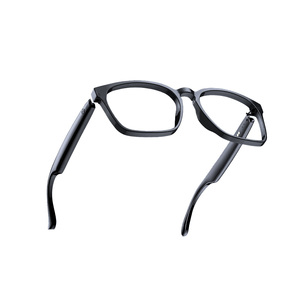
AI Translate Smart Glasses 6.0 | Wireless Magnetic Sunglasses
Real-Time Translation
Stabilized Audio
Magnetic Charging
Explore our export-ready tech eyewear portfolio engineered with optical precision, open-ear acoustic waveguides, and real-time AI capabilities.
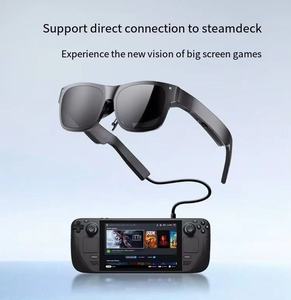
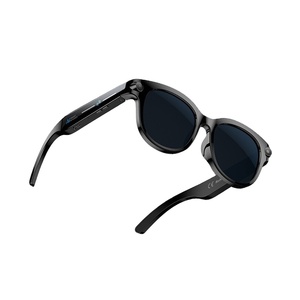
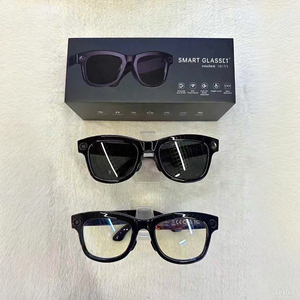
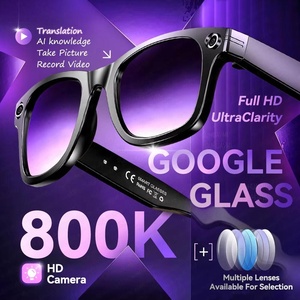
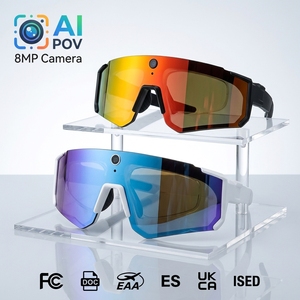
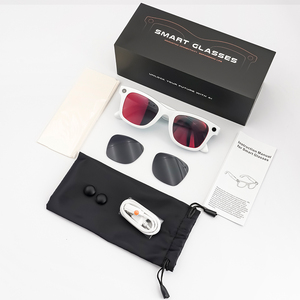
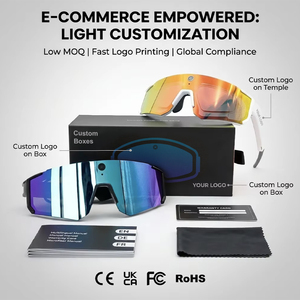
A rigorous evaluation of supply chain maturity, optical-electronic integration capacity, and regulatory export compliance across major Asian manufacturing hubs.
Information Gain Insight: The smart eyewear industry has reached a decisive structural inflection point. Traditional optical manufacturers lacking SMT (Surface Mount Technology) assembly expertise are rapidly merging capabilities with high-density PCB specialists to produce sleek, sub-30-gram frames capable of multi-modal AI processing, real-time voice translation, and high-fidelity open-ear acoustic projection.
Over the past five years, consumer tech procurement has shifted dramatically. Global buyers are no longer seeking heavy, clunky prototypes that look like futuristic head-mounted displays. Instead, the highest-reorder categories are high-end optical frames that seamlessly incorporate micro-speakers, noise-canceling dual-microphone arrays, and miniature camera modules without sacrificing aesthetic proportions or visual ergonomics.
Leading exporters have established certified optical laboratory partnerships capable of processing single-vision, progressive, blue-light blocking, and photochromic sun lenses directly into smart frames before export dispatch, drastically lowering the total cost of ownership for international distributors.
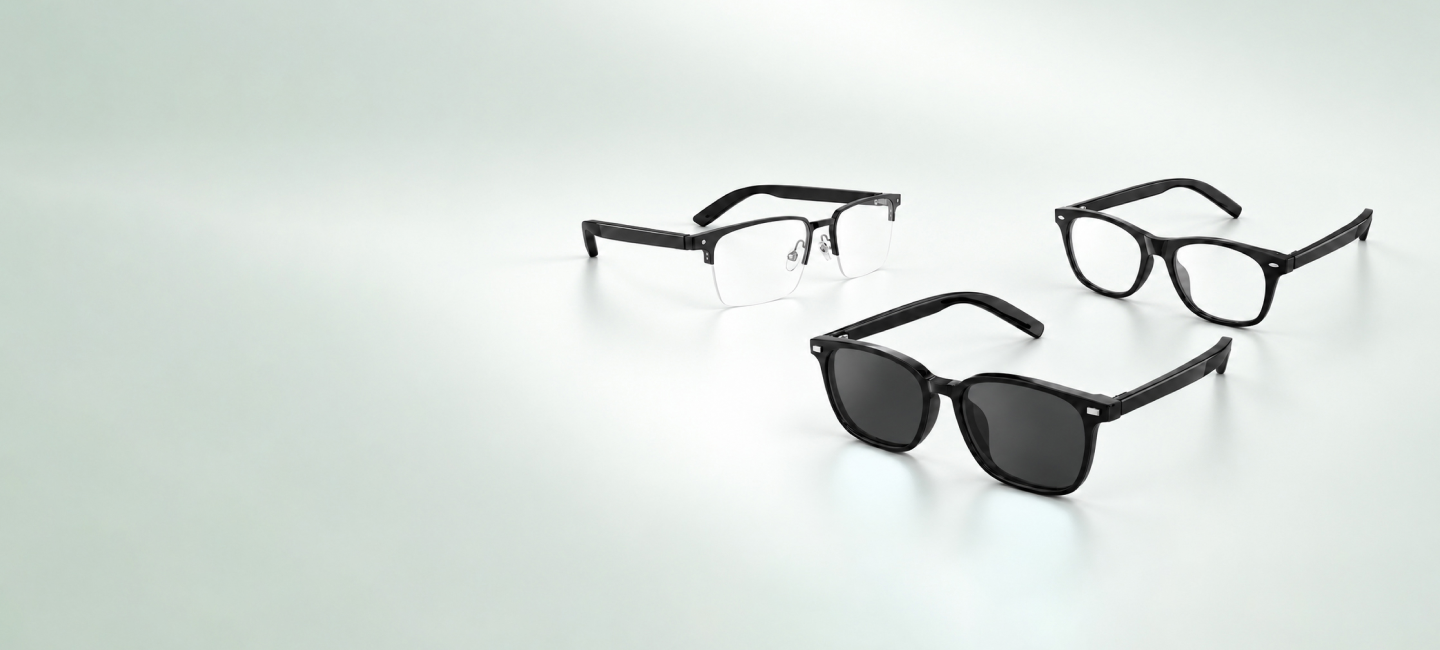
Before executing wholesale supply contracts or committing to private-label tooling, procurement teams must vet factories against five critical industrial competencies.
High-quality audio eyewear must project sound directly into the wearer's ear canal while preventing outward acoustic leakage. Leading factories employ inverse-phase acoustic chambers and directional sound tubes to maintain privacy in quiet office environments.
Balancing battery capacity with frame weight requires specialized lithium polymer cells contoured to temple geometry. Top exporters deliver 15-20 hours of standby and 4-6 hours of continuous call time using Bluetooth 5.3/5.4 Low Energy protocols.
Frames must be engineered with standard optical bevel grooves, pre-drilled wire pathways, and thermal-tolerant acetate or TR90 materials, allowing local opticians to insert prescription lenses without damaging sensitive electronics.
Sweat and rain are primary failure vectors for wearable electronics. Top manufacturers utilize nano-coating technology (such as P2i) on internal circuit boards alongside ultrasonic temple sealing to guarantee genuine IPX5 water resistance.
Modern B2B buyers require smart glasses backed by turnkey software. Advanced factories supply ready-to-label iOS/Android companion apps integrated with OpenAI (ChatGPT-4o), real-time translation servers, and customized voice command engines.
Tier-1 exporters hold fully documented CE, FCC, RoHS, REACH, UN38.3 (battery transport safety), and FDA registration for optical medical devices, mitigating customs clearance risks for European and North American importers.
Industrial benchmark table detailing production capacity, specialized capabilities, R&D focus, and key export markets for the industry's leading manufacturers.
| Manufacturer / Factory | Primary Product Specialization | Monthly Capacity | R&D Core Competency | Certifications & Export Markets |
|---|---|---|---|---|
| 1. Vigo Technologies / Dushan Tech | Open-Ear Audio, Prescription Smart Eyewear, AI Translation | 150,000 Pairs | Ultra-light 25g acetate frames, proprietary leakage reduction acoustic chamber | FDA, CE, FCC, IPX5, RoHS | North America, EU, Japan |
| 2. Shenzhen Luxvision Wearable Ltd. | Camera Smart Glasses, Live Streaming Video Frames | 100,000 Pairs | 8MP/4K EIS camera micro-miniaturization, heat dissipation chassis | CE, FCC, RoHS | North America, Middle East |
| 3. Dongguan Optical-Tech OEM Corp. | Micro-OLED Display AR Glasses, Gaming Eyewear | 60,000 Pairs | Optical waveguide engines, 120Hz high-refresh display alignment | CE, FCC, KC | South Korea, EU, USA |
| 4. Taiwan Precision Acoustics Eyewear | Hi-Fi Audio Sunglasses, Bone Conduction Frames | 120,000 Pairs | Directional transducer tuning, ultra-low distortion audio chips | CE, FCC, NCC | North America, Australia |
| 5. Wenzhou Smart Optics Industrial Co. | Budget Bluetooth Audio Sunglasses, TR90 Sport Frames | 300,000 Pairs | High-volume injection molding, quick-turn turn-key production | CE, RoHS, BSCI | South America, Southeast Asia |
| 6. Jiangsu VisionTech Electronics | ChatGPT AI Vision Eyewear, Object Recognition Glasses | 80,000 Pairs | Cloud AI API integration, low-power Wi-Fi video streaming module | CE, FCC, Telec | Japan, EU, North America |
| 7. Huizhou Micro-Optics Exporters | Cycling & Sports Smart Video Eyeglasses | 90,000 Pairs | Aerodynamic impact-resistant frames, polarized quick-swap lenses | IPX5, CE, FCC | Europe, South America |
| 8. Xiamen Luxury Smart Frame Labs | High-End Acetate & Titanium Smart Eyewear | 50,000 Pairs | Hand-crafted CNC acetate polishing, hidden hinge SMT integration | FDA, CE, REACH | Western Europe, North America |
| 9. Changzhou Wearable Sound Tech | Open-Ear Noise Canceling Mic Workstation Glasses | 110,000 Pairs | Dual-mic beamforming noise suppression algorithms for voice calls | CE, FCC, UKCA | UK, Germany, USA |
| 10. Chengdu AR Photonics Manufacturing | Industrial Enterprise HUD & AR Safety Glasses | 30,000 Pairs | Ruggedized optical combiners, industrial safety impact protection | ANSI Z87.1, CE | North America, EU |
Strategic technology roadmaps that will define high-margin smart eyewear procurement over the next five years.
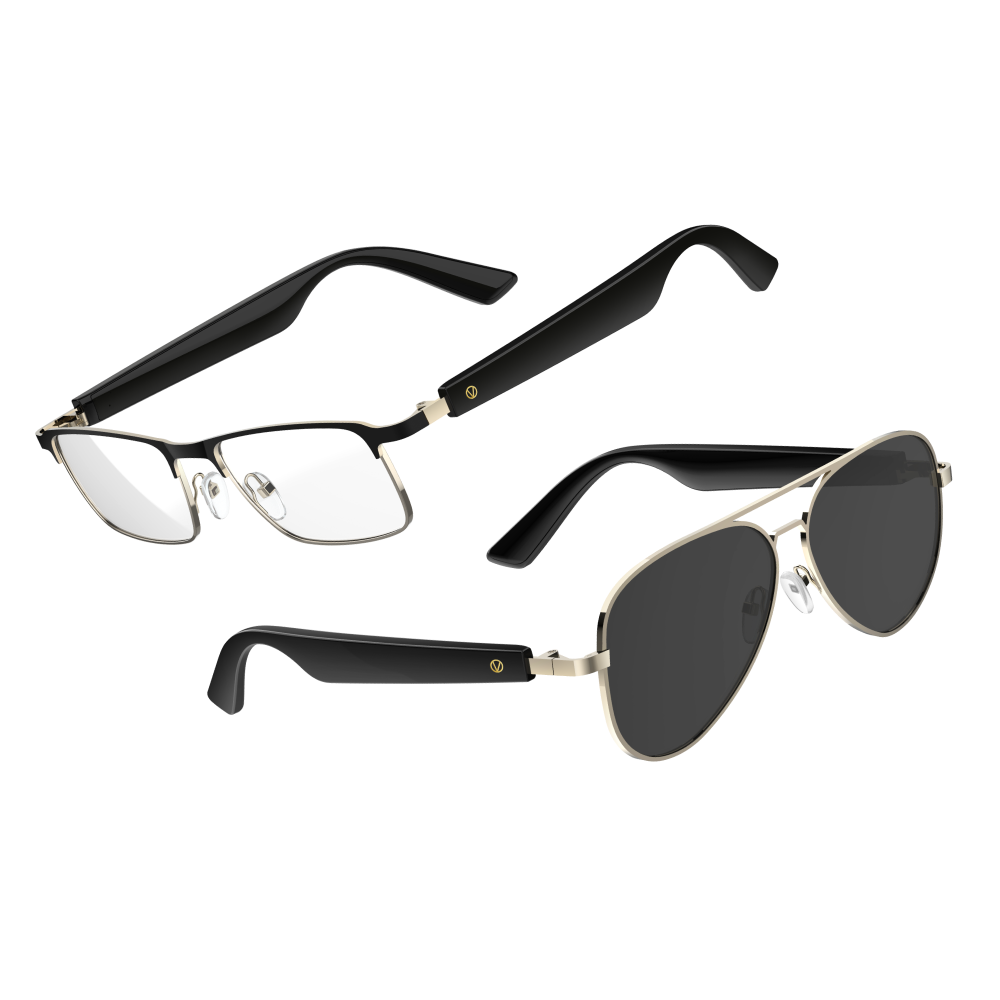
The convergence of generative AI and wearable sensors is changing how consumers interact with eyewear. Future smart frames will no longer rely solely on smartphone processing. Exporters are embedding low-power neural processing units (NPUs) directly into temple stems.
This allows instantaneous offline translation across 20+ languages, visual object identification via 8MP micro-cameras, and proactive voice assistance without introducing audio latency or high cellular data usage.
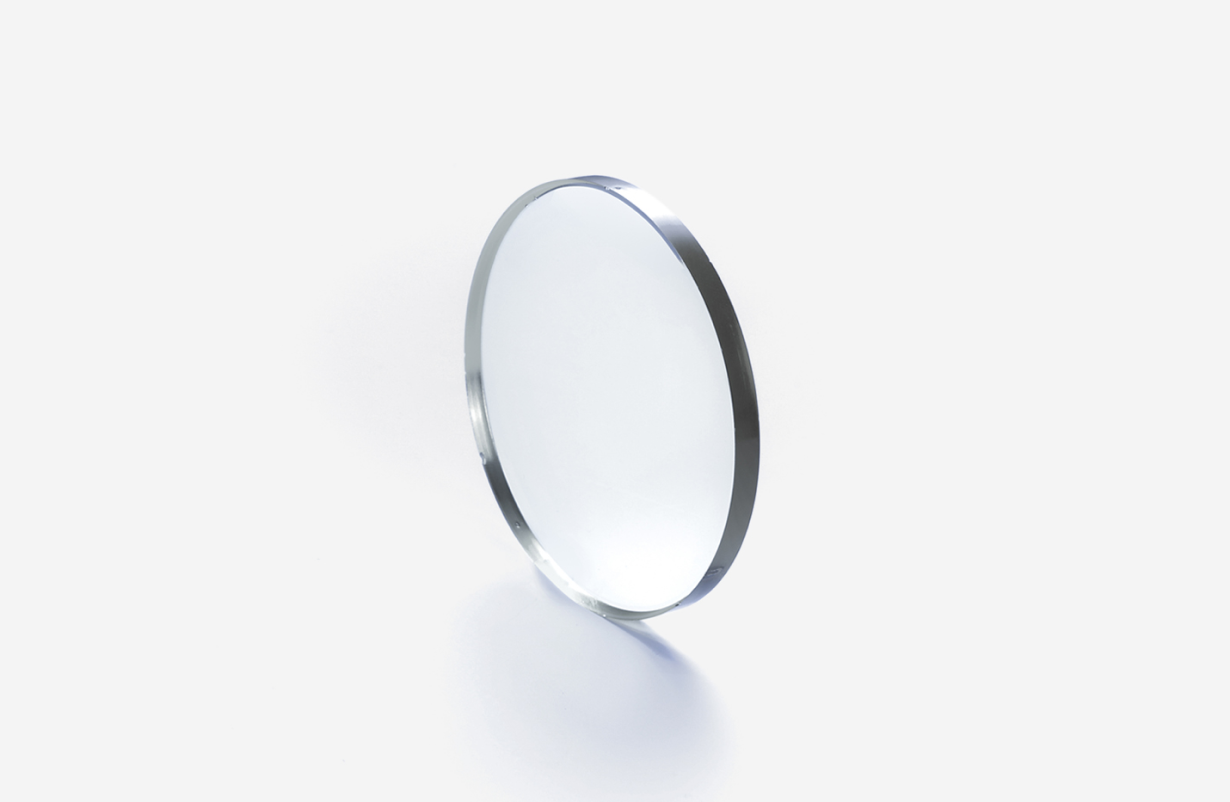
Historically, smart glasses failed to capture mainstream market share because they could not accommodate prescription lenses without custom tooling. Leading factories now manufacture frames utilizing standardized 2-base and 4-base curve lens channels.
This structural standardization enables optical retail chains, online E-commerce brands, and vision insurance providers to fulfill single-vision, progressive, photochromic, and blue-light blocking orders through standard optical surfacing equipment.
By migrating from heavy PC materials to aircraft-grade titanium and high-density Swiss EMS TR90, factories have reduced total frame weight down to 25 grams—equivalent to traditional designer optical frames.
Proprietary clip-on chargers are being phased out in favor of magnetic pogo-pin dock cases and localized inductive charging coils, significantly reducing field returns caused by port oxidation or mechanical wear.
Top tier exporters now offer modular temple assemblies, allowing brands to mix-and-match optical frame fronts (browline, round, cat-eye, sport shield) with standardized electronic temple arms.
Iterative hardware design, rigorous optical lab compatibility, and documented global compliance for B2B brand partners.
Smart eyewear manufacturing requires deep operational experience. Over three consumer generations, our engineering team has analyzed field telemetry, acoustics logs, and lens glazing reports from over 10,000 deployed units worldwide.
We solved the core failure modes common to first-generation hardware: temple bulkiness, acoustic leakage in office environments, charging terminal corrosion, and complex Bluetooth pairing dropouts. Our modern production revision delivers ultra-slim temple profiles that pass indistinguishably as luxury designer eyewear.

Detailed technical and operational answers to assist procurement directors, importers, and brand managers during supplier evaluation.
Ready to Source High-Margin Tech Eyewear for Your Market?