Engineered for immediate white-label production, bulk procurement, and enterprise customization. Equipped with high-yield acoustic chambers, optical prescription compatibility, and localized AI integration.
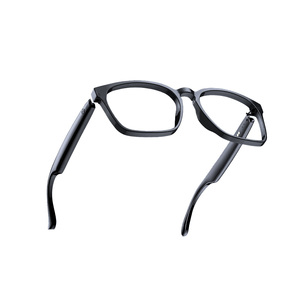
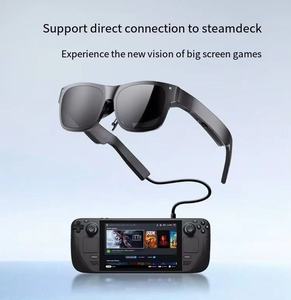
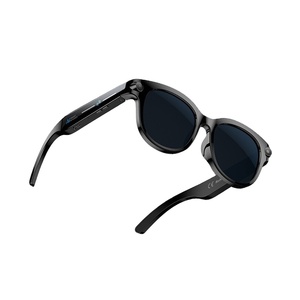
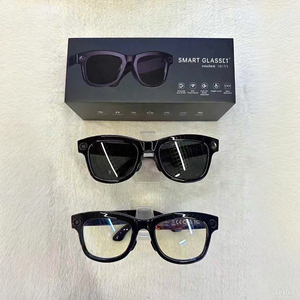
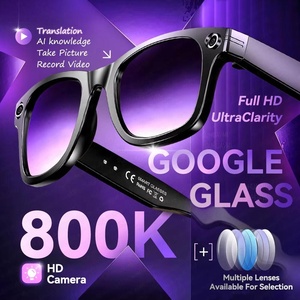
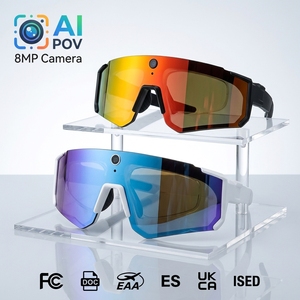
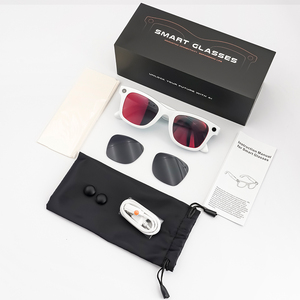
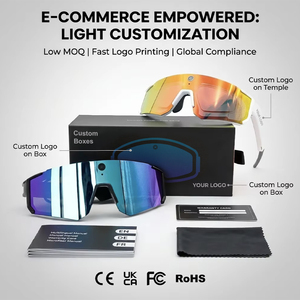
Navigating the technical transition from legacy eyewear to intelligent connected frames requires specialized micro-electronics integration, acoustic wave simulation, and optical prescription compliance.
Our proprietary directional audio chambers utilize inverse wave-cancellation technology. Sound waves are concentrated precisely into the user's ear canal, minimizing sound leakage by up to 88% compared to open-air speakers. This guarantees crystal-clear conference calls and private AI responses in quiet office environments.
Unlike generic consumer electronics manufacturers, our OEM manufacturing lines incorporate certified optical laboratory standards. Every frame SKU accepts standard single-vision, progressive, blue-light filtering, photochromic, and polarized prescription lenses (Rx) without stressing sensitive internal PCB circuitry or temple flex hinges.
We provide enterprise clients with white-label iOS/Android SDKs and customizable API hooks. Power your smart eyewear lines with ChatGPT-4o visual recognition, real-time 20+ language offline/online neural translation engines, and touch-to-cloud voice assistant workflows built on Bluetooth 5.3 Low Energy architecture.
Comprehensive engineering comparison across custom OEM frame categories for procurement directors and product managers.
| Engineering Metric | Audio & Voice Assistant Series | AI Vision & Camera Series | Micro-OLED AR Display Series |
|---|---|---|---|
| Primary Processing Core | Dual-Core Ultra-Low Power Audio DSP | Qualcomm / NPU Vision Chipset | High-Performance Spatial Computing SoC |
| Display Technology | N/A (Audio-First Interface) | Optional Micro LED Status Indicator | Binocular Micro-OLED (1080P per eye, 120Hz) |
| Optical Sensor & Camera | N/A | 8MP CMOS, 1080P/30fps Video Recording | Spatial Depth Camera / SLAM Positioning |
| Microphone System | Dual Beamforming MEMS Noise Canceling | Quad-Mic Array with Wind-Noise Suppression | Dual MEMS Array with Spatial Audio Mic |
| Chassis Weight Range | 25g – 29g (Everyday Wearable) | 35g – 42g (Ergonomic Balance) | 65g – 78g (Lightweight Headset Profile) |
| Ingress Protection Rating | IPX5 Waterproof & Sweatproof | IP54 Dust & Splash Protection | IP52 Indoor / Outdoor Daily Use |
| Battery & Standby Time | Up to 20 Hours Standby / 6h Playback | Up to 14 Hours Standby / 3.5h Recording | Continuous Docked Power / 2h Active Display |
| Compliance & Certifications | FCC, CE, RoHS, FSA/HSA, REACH, TELEC | FCC, CE, RoHS, ISO9001 Quality System | CE, FCC, Display Safety Eye Protection |
As the global wearable tech market transitions from smartwatches to facial wearables, our R&D centers focus on three transformative technological pillars.
The era of simple Bluetooth voice-prompt glasses has given way to visual and contextual intelligence. Modern smart eyewear acts as an always-available edge node for Large Language Models (LLMs). By pairing 8MP ultra-low-power camera sensors with real-time vector processing, users can contextually analyze objects, translate physical text instantly, or request workflow guidance via natural conversational AI. OEM production now prioritizes on-device neural processing to preserve battery life while cutting cloud API latency to under 300 milliseconds.
The primary consumer barrier to adoption has historically been weight and thermal dissipation. 2026 manufacturing trends demand smart eyewear frames weighing under 30 grams. Our engineering team utilizes custom ultra-thin Swiss Grilamid TR90 memory polymers combined with CNC-machined titanium temple cores. Electronics are distributed evenly across temple tips to balance front-heavy lens loads, eliminating nose-bridge fatigue during 12-hour continuous wear.
Charging friction is a major point of consumer return. OEM developments have shifted away from fragile open Micro-USB/Type-C ports toward completely sealed IPX5/IPX7 magnetic contact points. Drop-in charging cases featuring high-density lithium polymer battery banks allow end users to extend operational standby times up to 72 hours, positioning smart audio-visual eyewear as true replacements for traditional optical frames.
To capture mass market optical retail channels, smart eyewear must seamlessly integrate into existing optometrist workflows. OEM frames are engineered with standard V-groove lens bevels, enabling optical labs worldwide to cut and glaze custom single-vision, progressive, photochromic, and high-index lenses without risking electrical short-circuits. This compliance unlocks insurance, FSA, and HSA reimbursement channels for global brand partners.
Key strategic takeaways for optics brands, telecom operators, and consumer electronics distributors planning multi-year OEM volume commitments.
Enterprise buyers are moving away from single-purpose molds. Modular temple assembly allows distributors to reuse a single electronic audio core across multiple front-frame styles (browline, square, cat-eye, round) reducing NRE (Non-Recurring Engineering) costs by up to 60%.
Leading suppliers supply pre-assembled empty frame chassis to regional optical hubs. Lens glazing is executed locally, drastically reducing international fulfillment times from weeks to under 48 hours while maintaining factory warranty integrity.
Global retail mandates require bio-based, hypoallergenic acetate and recycled packaging. OEM manufacturing processes now integrate bio-cellulose frame materials that degrade responsibly without leaching toxins, meeting stringent EU REACH environmental standards.
From initial industrial design concept to certified mass assembly, our factory workflow delivers high yield rates and total quality assurance.
Custom 3D CAD modeling, head-scan ergonomic simulations, weight balance analysis, frame style selection, and preliminary acoustic chamber modeling.
Custom flex-PCB layout, SMT micro-component mounting, MEMS dual-mic noise cancellation placement, micro-speaker baffle tuning, and antenna optimization.
High-precision steel mold creation, CNC temple milling, rapid 3D SLA prototyping, initial acoustic isolation testing, and thermal behavior evaluation.
SDK integration, custom Bluetooth pairing naming, touch gesture re-mapping, cloud translation API embedding, and over-the-air (OTA) update setup.
IPX5 water jet testing, 10,000-cycle temple hinge endurance tests, drop shock evaluation, extreme temperature storage, and optical alignment checks.
Dust-free cleanroom SMT assembly, automated optical inspection (AOI), custom brand packaging, international compliance certification, and global freight drop-shipping.
Clear, direct answers regarding Minimum Order Quantities (MOQ), custom tooling costs, firmware integration, and compliance protocols.
For existing off-the-shelf frame molds with custom logo laser etching and personalized packaging, our MOQ starts at 500 units per style. For complete ODM custom frame tooling, custom color matching, and bespoke PCB layout engineering, the standard production MOQ is typically 1,000 to 2,000 units depending on component specifications.
Yes. All of our OEM smart glasses frames are engineered with standard optical V-groove frame bevels. Certified optical laboratories can fit single-vision, progressive, blue-light filtering, photochromic (e.g., Transitions), and polarized sunglass lenses directly into the frames without damaging internal electronic components or waterproofing seals.
Our 3rd-generation open-ear smart glasses utilize dual directional speaker drivers mounted within dedicated acoustic isolation chambers. The sound is projected downward at a precise angle towards the user's ear canal, while reverse-phase acoustic waves cancel out outward dispersion. At standard listening volumes, ambient sound leakage is imperceptible to colleagues standing more than three feet away.
We offer white-label iOS and Android companion apps that can be customized with your brand logo, UI color schemes, and preferred cloud AI engines. Our firmware supports direct API integration with OpenAI ChatGPT, Google Gemini, and custom enterprise translation engines. We also provide Android/iOS SDKs for enterprise client teams who wish to build smart eyewear support into their existing native applications.
Our manufacturing facilities operate under strict ISO9001 quality management systems. All production units are compliant with FCC (USA), CE-RED (Europe), RoHS (Environmental Hazards), REACH (Chemical Safety), TELEC (Japan), and UN38.3 (Lithium Battery Transport) standards. Full compliance test documentation and test reports are supplied prior to shipment.
Yes. Because our frames are recognized as prescription-ready protective optical eyewear when glazed with corrective lenses, they qualify for Flexible Spending Account (FSA), Health Savings Account (HSA), and out-of-network vision insurance coverage in major global markets such as North America.
Rapid prototyping and sample delivery generally take 7 to 14 business days. Custom tooling for new ODM frame designs requires approximately 30 to 45 days. Once mass tooling and firmware customization are approved, standard production lead time for bulk orders is 35 to 45 days depending on component availability and batch sizing.
Partner with an experienced industrial leader in micro-acoustics, optical glazing integration, and AI vision hardware. Request a complete technical specification packet, sample frames, and bulk price quotation today.