
Vue Smart Glasses
All Products
Eyeglasses
Sunglasses
Accessories
Vue Lite 3
How It Works
Lenses
Vue App
FSA, HSA & Insurance
About
Contact
Explore Top Picks Find a Store
0%

Prescription Audio Sunglasses combine vision correction with discreet listening, but the category includes several distinct designs. Some use open-ear speakers built into the temples. Others emphasize lightweight frames, sport stability, or interchangeable prescription lenses. Understanding these differences helps buyers compare comfort, sound, battery life, and lens options—not just appearance.

The need for reliable vision correction is substantial. The World Health Organization’s World Report on Vision (2019) estimated that at least 2.2 billion people worldwide have near or distance vision impairment; at least 1 billion cases were preventable or unaddressed. That figure is broad, not a measure of demand for audio eyewear. Still, it underlines why accurate prescriptions and dependable optical fitting matter. Audio features should complement clear vision, not distract from it.

In this guide, we’ll examine the top types of Prescription Audio Sunglasses, including everyday open-ear models, active-use frames, and designs suited to custom lenses. Buyers should check whether their prescription range is supported, whether lenses can be replaced, and how the frame feels after an hour of wear. Ask about return and adjustment policies, too. Small details matter.

Category labels can be confusing. Some market reports group audio eyewear with smart glasses or broader wearables, making direct comparisons difficult. Product specifications and independent testing are therefore worth checking. A tempting frame may sound great in a short demo, yet feel heavy by lunchtime. Comfort is personal. And sometimes, the simplest design wins.
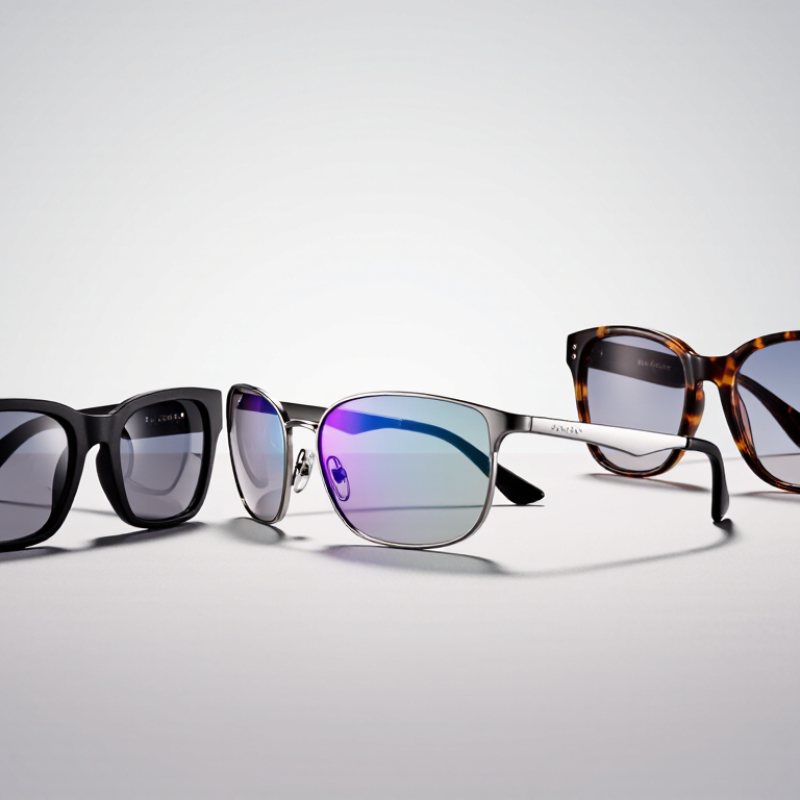
Top Types of Prescription Audio Sunglasses for Buyers

Prescription Audio Sunglasses: Frame Design, Prescription Range, and Fit

Prescription Audio Sunglasses: Frame Design, Prescription Range, and Fit

Frame shape affects both appearance and lens performance. A shallow lens may limit usable space for some prescriptions, while a strongly curved frame can require special lens design. Ask an optician to check your prescription against the frame before ordering. Higher prescriptions may make lens edges thicker, especially in wide frames. A lighter, narrower design can help, but it may not suit every face. Small trade-offs matter.

Fit deserves equal attention because audio components can add weight near the temples. Check that the arms sit securely without pressing behind your ears. The bridge should stay in place when you look down, and the lenses should align comfortably with your eyes. Try the frames on for several minutes, not just a quick glance in a mirror. A stylish pair can still feel wrong after an hour. I would not assume the first adjustment solves everything; comfort can take a little testing.

Tips: Bring your current prescription and ask about lens compatibility, frame width, and any limits on lens curvature. If possible, test the sunglasses while walking and turning your head. Check that buttons are easy to reach, the arms do not squeeze, and the lenses provide clear vision from edge to edge. Small details count.

Open-Ear Bluetooth Models: Bluetooth 5.2 and LE Audio Compatibility

Open-ear prescription audio sunglasses combine corrective lenses with small speakers positioned near the ears. Bluetooth 5.2 can support newer wireless features, but the version number alone does not confirm LE Audio compatibility. Check the product specifications for explicit LE Audio and LC3 support. Your phone or other audio source must support them too.

Compatibility matters in daily use. If only one device supports LE Audio, the glasses may connect through standard Bluetooth instead, or certain features may be unavailable. Ask the seller which connection modes work with your phone model and operating system. A short test can reveal delays during video playback, dropouts outdoors, or microphone issues on a call. Details vary.

Open-ear sound lets you hear nearby traffic and conversation, though music may also be audible to people close by. At a quiet desk, keep the volume modest. For a prescription pair, confirm that the frame accepts your lens prescription and fits comfortably over several hours. Bluetooth specifications are useful, but they cannot tell you whether the bridge presses on your nose or the speakers align well. I would not choose on version number alone.

Bone-Conduction Audio Sunglasses: Transducer Placement and Sound Delivery

Bone-conduction audio sunglasses place small transducers against the temples, usually just ahead of the ears. They vibrate the skull, sending sound to the inner ear without relying on the ear canal in the usual way. Contact matters more than appearance. A loose frame can weaken bass and make speech sound thin; excessive clamping may cause pressure over time. Prescription lenses add weight, so check the balance with your actual lenses installed.

The WHO’s 2021 World Report on Hearing projects that nearly 2.5 billion people will have some hearing loss by 2050. At least 700 million may need rehabilitation. These are not sunglasses-market figures, but they underline why clear fit and use information matters. Bone-conduction audio is not a substitute for prescribed hearing care. Sound can also leak to nearby people, and noisy streets may mask quiet audio.

Tips: Try familiar speech and music at a comfortable volume. Check that both transducers touch your temples when you smile or chew. Ask whether the frame can be adjusted without shifting your prescription lenses. Fit can seem fine in a shop, then feel different after a long walk. That detail is easy to miss.

Polarized Prescription Audio Sunglasses: Category 3 Lenses Transmit 8–18% of Light

Category 3 lenses transmit 8–18% of visible light, according to ISO 12312-1. That makes them useful in bright sun, where pavement and water can create sharp glare. Polarized lenses reduce reflected glare, but polarization is not the same as UV protection. Check for a separate UV400 or 100% UVA/UVB protection claim. Small label, important difference.

The World Health Organization’s Global Solar UV Index guide recommends sun protection when the UV Index reaches 3 or higher. Dark lenses can feel comfortable, but darkness alone does not show how much UV protection they provide. Audio features add another practical consideration: speakers near the temples should not press against prescription frames. Fit can be easy to overlook.

For prescription buyers, confirm that the frame accepts the required lens prescription and that the lenses retain their stated category after fitting. Category 3 is not intended for dim conditions, so keep a clearer pair for overcast evenings or indoor use. This is not a perfect all-day solution. Check the fit while moving your head, too; a frame that shifts can make controls and listening less comfortable.

Photochromic Prescription Audio Sunglasses: Lens Options Under ISO 12312-1

Photochromic prescription audio sunglasses need to balance clear vision, outdoor protection, and comfortable temple fit. The Vision Council’s 2022 Consumer inSights report found that about 75% of U.S. adults use some form of vision correction, making prescription accuracy a practical priority. ISO 12312-1 classifies sunglass lenses by visible-light transmittance: Category 2 transmits 18–43%, while Category 3 transmits 8–18%. These ranges help buyers compare darkness, but they do not replace a prescription check or confirm UV protection on their own. Read the lens markings and ask the optical professional to verify the finished pair.

Photochromic lenses darken in response to light, but performance can vary with temperature and the vehicle’s windshield. A lens that darkens outdoors may stay lighter in a car. Check whether the lens has been tested for the conditions where you will use it, and confirm its Category rating after activation. Audio components add weight near the ears; a frame that feels fine for five minutes may press during a longer walk. Small fit details matter.

Tips: Try the sunglasses with your prescription and audio settings active. Ask about transition time, UV protection, and care instructions. Do not assume every photochromic lens darkens equally. ISO 12312-1 is a useful reference, not a substitute for individualized fitting. One uncertainty remains: real-world tint can feel different from a category number.

Photochromic Prescription Audio Sunglasses: Lens Options Under ISO 12312-1

Visible light transmittance ranges for sunglass filter categories

ISO 12312-1 filter categories are based on visible light transmittance (VLT): Category 0 transmits 80–100%, Category 1 43–80%, Category 2 18–43%, Category 3 8–18%, and Category 4 3–8%. These ranges describe the lens filter category; they do not indicate how quickly a photochromic lens changes tint. Category 4 lenses are not suitable for driving. Check the product’s conformity information and intended-use guidance when selecting prescription eyewear.

FAQS

Does a wireless version number confirm support for newer audio features?

No. Check for explicit LE Audio and LC3 support in both the glasses and your phone. The version number alone is not enough.

What happens if only one device supports LE Audio?

The devices may use a standard connection, or some features may be unavailable. Ask whether your phone model and operating system are compatible.

How can I test audio before choosing a pair?

Play familiar speech and music, then try a video and a phone call. Check for delays, dropouts, and microphone problems. A short test helps.

Can nearby people hear open-ear audio?

They may hear some music, especially in a quiet room. Keep the volume modest at a desk or around other people.

How should bone-conduction frames fit?

The transducers should touch both temples without uncomfortable pressure. Check the fit while smiling or chewing. Fit matters more.

Can prescription lenses change how audio sunglasses feel?

Yes. Prescription lenses add weight, which can affect balance and pressure. Try the frame with your actual lenses, not just an empty frame.

Do photochromic lenses darken the same way everywhere?

No. Temperature and a vehicle’s windshield can affect how dark they become. Check the lens rating after activation and ask about UV protection.

What does a lens category tell me?

Category 2 transmits 18–43% of visible light; Category 3 transmits 8–18%. The category does not confirm your prescription or UV protection. I would not rely on the number alone.

What should I check during a longer fitting?

Wear the pair for several hours if possible. Notice whether the bridge presses your nose or the temples feel tight. Five minutes can be misleading.

Conclusion

Prescription Audio Sunglasses combine vision correction, sun protection, and personal audio in one wearable design. Buyers should consider frame shape, weight, and fit, along with whether the available prescription range suits their needs. Open-ear models use Bluetooth to connect wirelessly while leaving the ear canal uncovered; Bluetooth 5.2 and LE Audio compatibility can influence connection features and device support. Bone-conduction designs take a different approach, using transducers positioned against the frame near the temples to deliver sound through vibration.

Lens choice is equally important. Polarized prescription audio sunglasses may use Category 3 lenses that transmit approximately 8–18% of visible light, making them a consideration for bright conditions. Photochromic options change tint in response to light, though their performance depends on the lens design and environment. Buyers can compare lens choices with applicable ISO 12312-1 requirements and weigh audio comfort, optical needs, and everyday fit together.

Evelyn

Evelyn

Evelyn is a dedicated marketing professional with a strong understanding of the company’s products, customers, and industry landscape. Through clear communication and thoughtful market analysis, she helps translate complex product features into practical value for businesses and everyday users. Her......