0%

China’s Prescription Smart Glasses market is expanding beyond simple wearable displays. Suppliers now combine prescription lenses, microphones, cameras, speakers, and lightweight frames. This combination creates practical value for professionals, travelers, and users with daily vision needs. However, product quality can differ sharply between factories.

A reliable supplier should demonstrate optical expertise, stable manufacturing, and transparent testing records. Buyers should inspect lens options, prescription accuracy, frame durability, battery performance, and software compatibility. Ask for samples. Examine the hinges, nose pads, charging contacts, and lens edges under normal lighting. Small details often reveal production discipline. Suppliers should also explain quality-control procedures, warranty coverage, data protection, and technical support. Relevant certifications and documented compliance deserve careful review, not casual acceptance. Claims about artificial intelligence or all-day battery life should be tested under realistic conditions.

The strongest suppliers are not always the largest exporters. Some experienced manufacturers offer better customization, clearer communication, and more responsive engineering support. Others may present polished samples but struggle with repeat orders. That matters. A thoughtful sourcing process compares factory experience, optical partnerships, production capacity, and after-sales responsibility. It should also consider whether the supplier can manage prescription verification without compromising user privacy. No supplier is perfect. Communication gaps, changing component costs, and software limitations can still affect delivery. This guide examines leading Chinese suppliers through practical criteria, helping buyers identify capable partners for safe, comfortable, and dependable Prescription Smart Glasses.
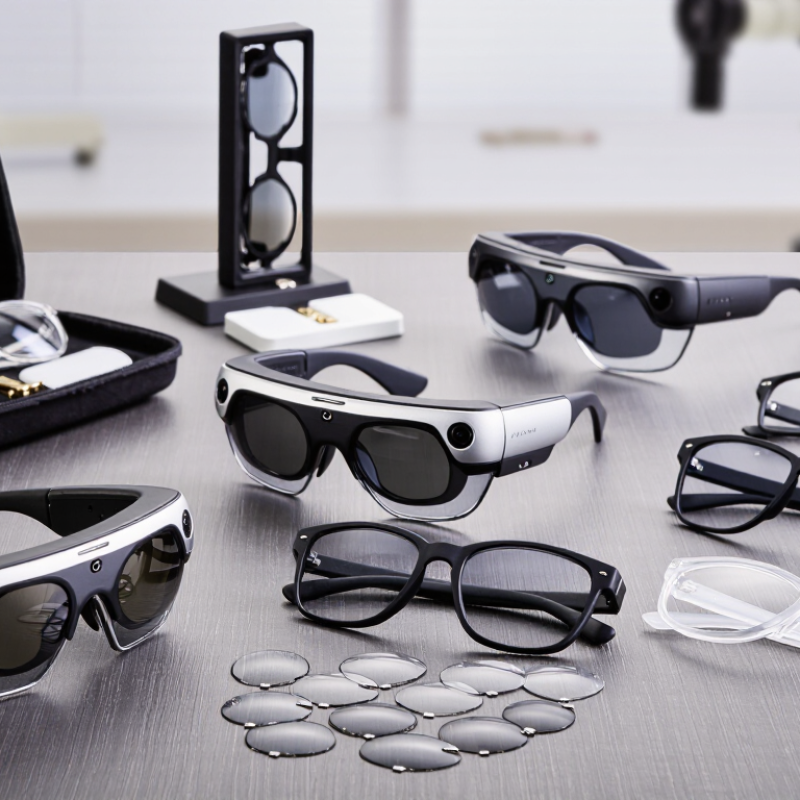
China Top Prescription Smart Glasses Suppliers?

What Are Prescription Smart Glasses?

Prescription smart glasses combine vision correction with compact digital functions. They use customized lenses based on an eye examination, not a standard reading prescription. The frame may include microphones, speakers, cameras, sensors, or a small visual display. Some models provide navigation, hands-free calls, translation, or reminders. The exact functions depend on the design.

A proper fitting requires more than choosing lens power. An optometrist should confirm sphere, cylinder, axis, pupillary distance, and fitting height. These measurements affect comfort and visual accuracy. Lens thickness also matters, especially for stronger prescriptions. Lightweight materials can reduce pressure around the nose and ears. Small errors become noticeable after several hours.

Comfort comes first. A reliable supplier should offer prescription samples, clear lens specifications, and documented quality checks. Testing should include battery stability, optical clarity, hinge strength, and microphone performance. Privacy controls deserve equal attention. Cameras and recorded audio must follow local rules and informed-consent practices.

The first fitting may feel awkward. That is normal. A common mistake is treating smart glasses like ordinary eyewear. Their weight distribution can be different. Buyers should check adjustment support, replacement lenses, warranty terms, and after-sales communication. I would also question impressive claims without independent test details. Better evidence usually comes from measured results, not polished product language.

How to Evaluate Chinese Prescription Smart Glasses Suppliers

How to Evaluate Chinese Prescription Smart Glasses Suppliers

China’s prescription smart glasses market deserves careful supplier screening. Grand View Research estimates the global smart glasses market reached about USD 1.6 billion in 2023, with strong growth expected through 2030. This growth attracts experienced manufacturers and inexperienced traders. Check the difference.

Ask for a working sample with your exact prescription, pupillary distance, and frame size. Test edge distortion, optical-center accuracy, nose-pad comfort, and lens thickness. A supplier should provide lens-material specifications, coating details, electrical safety reports, and documented quality controls. Look for production evidence, not polished showroom videos. A factory tour helps, but it does not replace testing.

Review the supplier’s firmware process and after-sales response. Battery capacity should match real use, not only laboratory claims. Request test results for charging cycles, heat, water resistance, Bluetooth stability, and microphone clarity. IDC’s worldwide AR/VR device research shows how quickly wearable hardware categories can change, so software support matters as much as frame construction. Confirm update ownership, repair procedures, spare-part availability, and warranty limits in writing. Smaller trial orders reduce risk. This costs more initially. It may reveal weak hinges, uneven lenses, or unstable pairing before mass production. Even careful buyers can miss something; independent optical inspection remains worthwhile.

Leading Types of Chinese Prescription Smart Glasses Suppliers

China’s prescription smart glasses suppliers generally fall into three leading types. Optical OEM and ODM factories focus on custom frames, prescription lenses, and low-volume sampling. Their strengths include flexible tooling, lens edging, and export documentation. Integrated AR suppliers add displays, cameras, spatial sensors, and prescription calibration. They suit buyers developing navigation, translation, or industrial-assistance products. A third group supplies audio and AI eyewear, using open-ear speakers, microphones, and cloud-connected software. These products look closer to ordinary spectacles, but prescription depth and battery placement still require careful testing.

Market data supports this segmentation. Grand View Research estimates the global smart glasses market will expand at a strong double-digit compound annual growth rate through 2030. Counterpoint Research’s smart glasses tracking also shows rising consumer adoption, driven by lighter frames and daily-use functions. However, market growth does not guarantee optical quality. Buyers should request ISO-related quality records, lens material specifications, IP testing, battery safety reports, and documented prescription ranges. Check the sample yourself.

A reliable Chinese supplier should explain pupillary distance limits, lens thickness, frame pressure, and replacement procedures before accepting an order. Experience matters here. A technically impressive prototype may still feel heavy after two hours. Some suppliers overstate software readiness, while others lack stable prescription-lens partners. That weakness deserves attention. Factory audits, pilot orders, firmware demonstrations, and independent optical inspection can reduce avoidable risks.

China Top Prescription Smart Glasses Suppliers? - Leading Types of Chinese Prescription Smart Glasses Suppliers
Supplier Type Prescription Glasses Format Primary Smart Functions Lens Compatibility Typical Connectivity Best-Fit Applications Key Buyer Verification Points
Optical AR Display Supplier Eyeglass-style frame with an optical display positioned in or near the user's field of view Navigation, notifications, translation, remote assistance, industrial instructions and contextual information Prescription inserts or prescription front lenses may be available; compatibility depends on optical design and prescription range Bluetooth Wi-Fi on selected models; smartphone or computer pairing is common Enterprise workflows, logistics, field service, training and hands-free information access Display brightness, field of view, eye-box, optical distortion, interpupillary adjustment, heat management and prescription fitting procedure
Audio Smart Glasses Supplier Conventional-looking prescription frame with integrated speakers and microphones Phone calls, music, voice assistants, reminders and hands-free communication Replacement prescription lenses or optical lenses supplied through an approved optical process Bluetooth Smartphone application normally required for configuration Daily wear, commuting, customer service, communication and personal audio Speaker leakage, microphone clarity, battery runtime, water-resistance rating, hinge durability and lens replacement support
Camera and AI Assistant Glasses Supplier Prescription-capable frame with one or more cameras, microphones and open-ear audio Photo and video capture, voice control, visual assistance, translation and remote communication Prescription lenses may be fitted as replacement lenses; camera position must remain unobstructed Bluetooth Wi-Fi or mobile-data connection may be used through a paired device Content capture, accessibility support, tourism, education and field documentation Camera resolution, privacy indicator, local data handling, application compatibility, recording controls and regional privacy compliance
Industrial Assisted-Reality Supplier Rugged head-worn device, sometimes designed to fit over or integrate with safety eyewear Barcode scanning, work instructions, remote expert support, inventory tasks and maintenance guidance Prescription carrier, prescription insert or certified protective-lens configuration may be offered Wi-Fi Bluetooth; enterprise device-management integration may be supported Warehousing, manufacturing, inspection, utilities and service operations Ingress protection, drop resistance, operating temperature, glove usability, battery replacement, software APIs and safety certification
Sports and Outdoor Smart Eyewear Supplier Performance-oriented frame with audio, sensors or a compact display module Workout audio, navigation, activity data, voice control and environmental awareness Prescription inserts or prescription-compatible lens options may be available, subject to frame geometry Bluetooth GPS and phone-based connectivity are common in this category Cycling, running, hiking, outdoor navigation and recreational activities Frame stability, sweat and water resistance, optical clarity, impact protection, control operation and battery performance
OEM/ODM Prescription Smart Eyewear Supplier Customizable frame platform developed for a buyer's own specification or sales channel Function set may include audio, cameras, sensors, displays, mobile applications and custom software Custom lens geometry, prescription range, coating options and optical packaging require technical confirmation Bluetooth Wi-Fi, USB connectivity and software integration depend on the selected platform Private-label programs, optical retail, corporate projects and specialized applications Tooling ownership, firmware rights, sample approval, quality-control plan, component traceability, warranty terms and regulatory documentation
Prescription Lens and Integration Supplier Optical laboratory or integration partner that prepares prescription lenses for an existing smart-glasses platform Optical customization rather than independent smart functions Single-vision, bifocal or progressive lenses may be possible when supported by the frame and optical design Not applicable as a standalone smart-device function Optical retailers, replacement-lens services and smart-glasses after-sales support Prescription accuracy, pupillary-distance measurement, lens material, coatings, edging tolerances, return policy and platform authorization
Prescription compatibility is model-specific. Buyers should confirm the supported sphere, cylinder, axis, pupillary distance, lens thickness, progressive-design limitations and applicable optical, electrical, wireless, safety and privacy requirements before placing an order.

Key Technologies and Customization Services to Compare

China Top Prescription Smart Glasses Suppliers?

Key Technologies and Customization Services to Compare

When comparing prescription smart glasses suppliers in China, inspect optical accuracy before design polish. A reliable supplier should support measured pupillary distance, sphere, cylinder, and axis values. Ask how technicians verify lens alignment after assembly. Small errors can cause eye strain during daily use.

Core technology matters just as much.

Compare display brightness, field of view, microphone clarity, speaker performance, and battery endurance under real conditions. Suppliers should explain their waveguide, camera, and connectivity options clearly. Request test reports for heat, drop resistance, charging safety, and wireless performance. Vague specifications deserve caution.

Customization often separates a prototype from a usable product.

Look for adjustable frame dimensions, lens materials, tint choices, nose-pad designs, and prescription ranges. Software customization may include language settings, mobile applications, voice controls, and data permissions. Confirm whether firmware updates remain available after delivery. This is often overlooked.

During sample reviews, wear the glasses for several hours, not several minutes.

Check comfort, fogging, weight balance, and prescription clarity in bright and dim environments. No supplier gets every detail right. Early samples may reveal loose hinges, uneven coatings, or confusing controls. That is useful feedback, not failure. A dependable partner records revisions, shares production tolerances, and provides a transparent quality-control process before mass manufacturing.

How to Choose the Right Supplier for Your Needs

China Top Prescription Smart Glasses Suppliers?

How to Choose the Right Supplier for Your Needs

Choosing a prescription smart glasses supplier requires more than comparing prices. Grand View Research reported that the global smart glasses market was valued at approximately USD 1.93 billion in 2023, with strong growth expected through 2030. This expansion attracts capable factories, but also inexperienced vendors. Request prescription range data, lens tolerance records, battery test results, and a working sample before discussing large orders. The frame should feel balanced, not front-heavy, after several minutes of wear.

Supplier experience matters. Ask whether the factory has optical engineers, embedded software specialists, and stable quality-control procedures. Check production capacity, minimum order quantity, replacement policies, and average lead times. A supplier that answers vaguely may create expensive delays. No checklist is perfect. I would still test samples in real conditions, including bright sunlight, indoor lighting, phone calls, and prescription fitting. Software support is easy to overlook.

Tips: Compare at least three suppliers. Ask for recent test reports. Confirm available lens powers. Review the sample approval process. Test nose pads and hinges repeatedly. Request clear ownership of custom designs. MarketsandMarkets estimates that smart glasses demand will continue rising sharply this decade, making supplier reliability increasingly important. However, market growth does not guarantee product maturity. A factory may offer impressive specifications but lack consistent after-sales support. Choose measurable evidence over attractive presentations.

China Top Prescription Smart Glasses Suppliers? How to Choose the Right Supplier for Your Needs

This procurement scorecard gives the greatest weight to prescription compatibility, product safety, optical quality, and production reliability. Buyers should verify each requirement with technical documents, samples, test reports, quality records, and written warranty terms before selecting a supplier.

FAQS

What are prescription smart glasses?

They combine vision correction with compact digital functions. Features may include microphones, speakers, cameras, sensors, or displays. Functions vary by design. Some support navigation, calls, translation, or reminders.

Which eye measurements are needed for prescription smart glasses?

An optometrist should confirm sphere, cylinder, axis, pupillary distance, and fitting height. These values affect visual accuracy and comfort. Small measurement errors can cause eye strain after several hours.

Why does frame balance matter?

Smart glasses may distribute weight differently from ordinary eyewear. A front-heavy frame can press against the nose. The temples may also feel tight. Wear the sample for several hours.

What should buyers inspect during a sample review?

Check prescription clarity in bright and dim environments. Also test fogging, hinge strength, nose-pad comfort, and weight balance. Try phone calls and voice controls. Several minutes are not enough.

Which technical specifications deserve comparison?

Compare display brightness, field of view, microphone clarity, speaker performance, and battery endurance. Ask for measured results under real conditions. Vague specifications deserve caution. Numbers need context.

How can buyers evaluate a supplier’s quality control?

Request lens tolerance records and recent test reports. Ask how technicians verify lens alignment after assembly. Testing should include heat, drop resistance, charging safety, and wireless performance. No checklist catches everything.

What customization options may be available?

Suppliers may offer adjustable frame dimensions, lens materials, tints, nose pads, and prescription ranges. Software options can include languages, mobile applications, voice controls, and data permissions. Confirm whether firmware updates remain available after delivery. This detail is easy to miss.

How should privacy be considered?

Cameras and recorded audio require clear privacy controls. Use informed-consent practices and follow local requirements. Ask how data is stored, accessed, and deleted. Convenience should not outrank privacy.

How many suppliers should buyers compare?

Compare at least three suppliers before making a decision. Request working samples, production capacity, minimum order quantities, lead times, and replacement policies. Test bright sunlight, indoor lighting, calls, and prescription fitting. A polished presentation proves little.

Conclusion

Prescription Smart Glasses combine vision correction with smart features such as hands-free information access, audio communication, cameras, sensors, and connected applications. This article explains how to assess Chinese suppliers by examining product quality, optical accuracy, manufacturing experience, certifications, communication, production capacity, and after-sales support. It also introduces major supplier categories, including optical manufacturers, smart hardware developers, original equipment manufacturers, and companies specializing in customized solutions.

The comparison focuses on key technologies such as display systems, battery performance, wireless connectivity, voice interaction, lightweight frame design, lens compatibility, and data protection. Customization services may include prescription lens options, frame styles, software integration, packaging, and private-label development. By clarifying target users, required functions, order quantities, budget, delivery expectations, and compliance needs, buyers can select a reliable supplier that offers suitable Prescription Smart Glasses, consistent quality, flexible customization, and dependable long-term cooperation.


Evelyn

Evelyn

Evelyn is a dedicated marketing professional with a strong understanding of the company’s products, customers, and industry landscape. Through clear communication and thoughtful market analysis, she helps translate complex product features into practical value for businesses and everyday users. Her......