0%

Open-Ear Audio Eyewear is moving from a niche experiment toward a practical wearable category. Consumers want music, calls, and navigation without fully blocking environmental sounds. That demand is visible in broader wearable growth. IDC’s Worldwide Quarterly Wearable Device Tracker continues to monitor strong global adoption across hearables, smartwatches, and related devices. However, reliable figures for audio eyewear alone remain limited. That gap matters.

China has become a major manufacturing base for compact electronics, acoustic modules, batteries, and wearable assemblies. Industry research from Grand View Research and Fortune Business Insights identifies smart glasses as a fast-developing market, although their forecasts use different product definitions. Some reports include display glasses. Others include camera devices. Direct comparisons can mislead.

Supplier quality is more than factory scale. It includes acoustic tuning, microphone performance, Bluetooth stability, hinge durability, skin-contact materials, and battery consistency. A useful supplier should also explain testing methods. Ask for sample records, production photos, ISO certifications, and realistic minimum order quantities. The small details show experience.

This guide examines leading Chinese suppliers through a practical sourcing lens. It considers OEM and ODM capability, prototype speed, customization, export experience, and after-sales support. Compliance remains essential, including applicable radio, battery, product safety, and data-protection requirements in the destination market.

The ranking is not absolute. Product fit changes by project. A supplier excellent for private-label sunglasses may lack advanced acoustic engineering. That is an easy mistake to make. Careful verification still beats attractive catalog images.
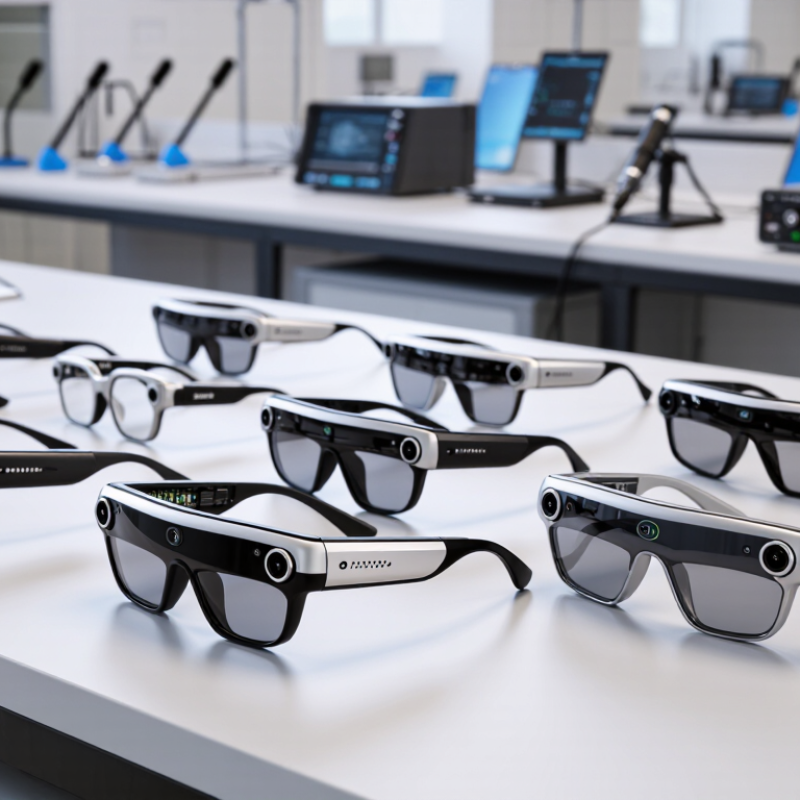
China Top Open Ear Audio Eyewear Suppliers?

What Are Open Ear Audio Eyewear Products?

Open ear audio eyewear combines ordinary-looking frames with small speakers near the ears. These speakers send sound toward the listener without sealing the ear canal. Users can hear music, calls, navigation prompts, and nearby conversations at the same time. That open design is the defining feature.

In practical testing, comfort depends on frame weight, speaker position, and temple pressure. A good pair should feel stable during walking, desk work, and light outdoor activity. It should also provide clear voices without excessive volume. Battery capacity, charging time, microphone performance, and water resistance deserve careful checking. Marketing language can sound impressive, but measurable specifications matter more.

The frames may include touch controls, physical buttons, or voice commands. Some models support prescription lenses, while others use standard clear or tinted lenses. Sound leakage remains possible, especially in quiet rooms. Fit remains personal.

A slightly loose frame can reduce bass and microphone consistency. Suppliers should explain testing methods, material choices, warranty terms, and compatibility details clearly. I would also request sample units before placing a large order. Product photos rarely reveal pressure points, delayed controls, or weak call quality. The category is useful, but it is not perfect.

How China’s Open Ear Audio Eyewear Supply Chain Works

China’s open ear audio eyewear supply chain is built around dense regional clusters. Frame molding, hinge production, PCB assembly, battery packing, and acoustic testing often sit within one sourcing network. This short distance reduces sample delays and simplifies engineering changes. It also creates pressure to copy familiar designs. That risk deserves attention.

Grand View Research estimates the global smart glasses market will expand at a strong double-digit rate through 2030. Its analysis highlights rising demand for lightweight devices, wireless connectivity, and hands-free functions. Counterpoint Research has also reported rapid growth in smart-glasses shipments, although market definitions vary between reports. This makes direct comparisons imperfect. Buyers should check each report’s product scope before trusting the numbers.

In practice, a Chinese supplier usually starts with an existing frame platform, then adjusts temple thickness, speaker placement, battery capacity, and microphone openings. Directional speakers require acoustic tuning beside the ear, not simple volume increases. Engineers test sound leakage, sweat resistance, hinge fatigue, charging safety, and Bluetooth stability. Certification planning should begin before mass production. A supplier may provide a polished sample in ten days, yet tooling corrections can take several weeks. That gap is easy to underestimate. Factory audits, incoming-material records, and batch-level testing provide stronger evidence than a catalogue page. Open ear products still need better long-term comfort data.

How China’s Open-Ear Audio Eyewear Supply Chain Works

Typical planning lead times for the main non-branded supply-chain stages. Actual timing varies by product complexity, order volume, tooling status, and certification requirements.

The workflow normally combines frame and lens production, acoustic and wireless-electronics integration, battery and charging assembly, quality testing, packaging, and export preparation. Tooling and engineering validation usually occur before pilot production, while quality control and packaging are repeated for every production batch.

Key Capabilities of Leading Chinese Suppliers

China Top Open Ear Audio Eyewear Suppliers?

Leading Chinese suppliers combine acoustic engineering with practical eyewear manufacturing. Their teams should understand directional speakers, microphone placement, and sound leakage control. Good suppliers can create clear audio without blocking environmental sounds. This matters during commuting, office work, and outdoor use.

Strong factories usually offer rapid prototyping, adjustable frame molds, and small pilot orders. They should provide acoustic test reports, battery-cycle data, sweat-resistance checks, and documented quality procedures. Traceable components also matter. A reliable supplier can explain lens options, hinge durability, charging contacts, and replacement processes clearly. In sourcing work, I have found that detailed samples reveal more than polished presentations. Some suppliers promise excellent bass, but the first prototype may feel weak. That is normal, yet careless revision delays are not.

Tips: Request two functional samples with different speaker tuning. Test call clarity in a busy street and a quiet room. Check frame comfort after two hours. Ask for production tolerances, inspection records, and realistic lead times. Confirm compliance documents for your target market, and verify them independently. A factory may have strong engineering but limited after-sales support. That weakness should be discussed before payment terms are finalized.

China Top Open Ear Audio Eyewear Suppliers? - Key Capabilities of Leading Chinese Suppliers

Capability Dimension Typical Capability of Established Chinese Suppliers Common Technical Parameters Recommended Buyer Verification
Product Architecture Integrated eyewear frame with directional speakers, microphones, battery, control buttons and wireless connectivity. Open-ear audio; Bluetooth wireless connection; left/right stereo or dual-channel configuration; replaceable nose pads or temples on selected designs. Review exploded drawings, component placement, thermal design and sample performance during movement.
Audio Output Suppliers commonly support tuned directional sound solutions designed to reduce sound leakage while preserving environmental awareness. Speaker sensitivity, frequency response, maximum output level, distortion and sound-leakage results should be defined in the specification. Request an audio test report, frequency-response graph, leakage measurement and listening samples in quiet and outdoor environments.
Bluetooth Connectivity Production programs generally support current Bluetooth Low Energy audio accessories and conventional Bluetooth profiles. Bluetooth 5.0 or later is common; supported profiles may include A2DP, AVRCP and HFP, depending on the chipset and firmware. Confirm supported profiles, operating-system compatibility, pairing distance, reconnection behavior and firmware-update method.
Battery and Charging Suppliers can customize battery capacity, charging contacts, magnetic charging cables and protective charging cases. Typical playback claims are often several hours per charge; total endurance depends on volume, call usage, Bluetooth mode and battery size. Require battery-cell documentation, charge-cycle testing, overcharge protection, standby-current data and a standardized playback test protocol.
Microphone and Calls Multi-microphone layouts and digital noise-reduction algorithms are available for voice calls and voice-assistant interaction. Dual- or multi-microphone input; environmental-noise reduction; wind-noise optimization; echo cancellation. Test speech clarity, wind performance, echo, microphone placement and call quality with different phone operating systems.
Frame Materials Common options include TR90-style thermoplastic frames, PC components, stainless-steel hinges and silicone nose pads. Material selection affects weight, flexibility, impact resistance, skin comfort and optical stability. Request material declarations, dimensional drawings, hinge-cycle results, drop tests and surface-finish samples.
Weight and Ergonomics Experienced manufacturers can adjust temple geometry, center of gravity, nose-pad design and component distribution for all-day wear. Finished weight is normally specified in grams; comfort also depends on clamp force, balance, temple thickness and fit range. Evaluate samples on different head sizes, measure weight and clamp force, and conduct extended-wear user trials.
Water and Sweat Resistance Many suppliers offer splash- or sweat-resistant designs, but protection depends on enclosure sealing and test conditions. IPX4 indicates protection against water splashes; higher ratings require appropriate testing and product construction. Ask for an accredited ingress-protection report and confirm whether charging ports, microphones and hinges are included in the test scope.
Optical Integration OEM/ODM programs may support clear, tinted, prescription-compatible or interchangeable lens configurations. Key variables include lens shape, pupillary distance, lens thickness, prescription range and frame tolerances. Confirm optical-lab partners, prescription limits, lens installation process and compatibility with regional requirements.
Industrial Design and Customization Customization can cover frame shape, colors, logo placement, button layout, packaging, acoustic tuning and companion-app appearance. 3D CAD, rapid prototypes, 3D printing, CNC samples, injection tooling and color-matching workflows are commonly available. Define tooling ownership, engineering-change procedures, color tolerances, intellectual-property rights and sample approval stages.
Firmware and App Support Suppliers may provide embedded firmware, mobile-app integration, OTA updates and configuration tools, depending on project scope. Possible functions include equalizer control, battery display, button mapping, device localization and firmware version management. Clarify source-code ownership, data handling, update responsibility, cybersecurity controls and long-term software support.
Compliance and Testing Export-oriented factories are familiar with product safety, radio, electromagnetic compatibility and chemical-compliance documentation. Depending on destination: CE, FCC, UKCA, RoHS, REACH, UN 38.3 and IEC 62133-2 may be relevant. Verify certificates against the exact model, battery, wireless module and market; use independent laboratory testing where required.
Manufacturing Process A capable supplier can coordinate injection molding, SMT assembly, acoustic assembly, optical fitting, final assembly and packaging. Key process controls include torque control, adhesive curing, waterproof sealing, battery installation and firmware flashing. Request a process-flow chart, production-line photos or audit access, equipment list, capacity plan and subcontractor disclosure.
Quality Management Mature factories typically use incoming inspection, in-process controls, end-of-line testing and traceability records. Useful indicators include ISO 9001 certification, defect classification, sampling plans, corrective-action records and lot traceability. Audit the quality system, approve a golden sample, define acceptance criteria and require pre-shipment inspection.
Production Scale and MOQ Minimum order quantities vary significantly according to tooling, electronics customization, packaging and lens requirements. Pilot runs may be available before mass production; larger orders generally improve unit economics and component allocation. Obtain written MOQ, pilot quantity, monthly capacity, lead time, component lead-time assumptions and scale-up conditions.
Supply-Chain Resilience Suppliers located in established electronics and eyewear manufacturing clusters can usually access a broad component and tooling ecosystem. Risk factors include chipset availability, battery allocation, optical-lens supply, tooling dependency and single-source components. Review the approved-vendor list, alternative components, safety-stock policy, component lifecycle status and business-continuity plan.
After-Sales Support Export suppliers may provide troubleshooting guides, replacement parts, repair instructions, warranty handling and technical support. Support scope should cover firmware faults, charging failures, audio defects, frame damage and battery-related issues. Agree on warranty period, response time, replacement-rate targets, spare-parts availability and return-material procedures.

Note: Capability ranges and verification points are industry-oriented reference criteria. Actual specifications, certifications, minimum order quantities and production capacity must be confirmed for the specific supplier and product model.

How to Compare China’s Open Ear Audio Eyewear Suppliers

China Top Open Ear Audio Eyewear Suppliers?

Comparing China’s open ear audio eyewear suppliers requires more than checking product photos. Review speaker placement, sound leakage, frame comfort, battery capacity, and charging performance. Ask for material details, especially for frames worn during long workdays or outdoor activities. A reliable supplier should provide clear specifications, stable sampling, and realistic production timelines. Request at least two samples from different production batches. Small changes can reveal weak quality control.

Check the supplier’s manufacturing experience, testing process, and export documentation. Factory photos are useful, but an independent audit offers stronger evidence. Confirm whether the supplier performs battery, water-resistance, acoustic, and durability tests. Ask for test reports from recognized laboratories when safety claims affect your market. Also compare minimum order quantities, tooling fees, warranty terms, and replacement procedures. Communication matters. Delayed answers may become delayed production.

Tips: Wear each sample for several hours. Check pressure near the ears, button response, microphone clarity, and Bluetooth stability in a busy room. Record charging time yourself. Do not rely only on a supplier’s spreadsheet. A polished prototype can still hide inconsistent assembly. I would also request a small pilot order before scaling, although this increases the unit cost. That extra cost may expose problems early. Compare written evidence, not confident promises.

Quality, Compliance, and Sourcing Considerations

China’s open-ear audio eyewear sector offers flexible manufacturing and fast prototype cycles. Bluetooth SIG’s 2024 Market Update forecasts 5.4 billion annual Bluetooth device shipments by 2028. This supports strong component availability. However, volume does not guarantee product quality. A polished prototype may still hide weak hinges, uneven speaker output, or battery heating.

Quality checks should cover acoustic balance, microphone clarity, sweat resistance, charging safety, and frame fatigue. Suppliers should provide repeatable test records, not only attractive samples. IEC 62368-1 supports audio equipment safety evaluation. UN 38.3 testing remains important for lithium battery transport. For European sales, buyers should verify RED, RoHS, REACH, and EMC documentation. Accredited laboratory reports are more reliable than editable internal files. Still, compliance files can become outdated after a component change.

Grand View Research forecasts strong smart-glasses market growth through 2030, with a projected compound annual growth rate above 20%. That growth may pressure factories to shorten testing time. Sourcing teams should audit production lines, inspect incoming components, and approve a locked golden sample. They should also review supplier traceability, firmware control, packaging tests, and corrective-action records. One practical weakness is often overlooked: suppliers may pass certification tests with one configuration, then substitute parts later. Purchase contracts should control substitutions clearly. No checklist is perfect. Independent pre-shipment inspection remains worthwhile.

FAQS

What capabilities should a capable open-ear audio eyewear supplier have?

The supplier should understand directional speakers, microphone placement, and sound leakage control.

Why are functional samples important during supplier evaluation?

Samples reveal sound balance, hinge quality, charging behavior, and frame comfort.

How many samples should buyers request?

Request two functional samples with different speaker tuning.

What practical tests should buyers perform?

Test call clarity, audio balance, sweat resistance, and charging safety.

Which quality records should a supplier provide?

Ask for acoustic tests, battery-cycle data, frame-fatigue checks, and inspection records.

How can buyers check compliance documents?

Match documents to the exact product configuration and target market.

What risks can appear after certification testing?

A supplier might change a speaker, battery, or charging component later.

What production controls help maintain consistent quality?

Approve a locked golden sample before mass production.

What should buyers review before agreeing to payment terms?

Review realistic lead times, replacement procedures, after-sales support, and testing responsibilities.

Conclusion

Open-Ear Audio Eyewear combines eyewear functionality with directional audio, allowing users to listen to calls, music, or navigation guidance without fully blocking surrounding sounds. China has developed a broad supply chain for these products, covering acoustic component manufacturing, frame development, electronics integration, battery assembly, software support, packaging, and export services. This connected ecosystem enables suppliers to offer flexible product solutions for different markets and user requirements.

When comparing Chinese suppliers, buyers should evaluate design capability, acoustic performance, comfort, battery life, water resistance, production capacity, customization support, and communication efficiency. Quality and compliance are equally important, including material safety, electrical testing, wireless certification, factory quality control, traceable documentation, and reliable pre-shipment inspection. A professional supplier should provide clear samples, stable production standards, transparent lead times, and responsive after-sales support. By reviewing these factors together, buyers can identify suitable manufacturing partners and build a dependable, compliant, and competitive Open-Ear Audio Eyewear product line.


Evelyn

Evelyn

Evelyn is a dedicated marketing professional with a strong understanding of the company’s products, customers, and industry landscape. Through clear communication and thoughtful market analysis, she helps translate complex product features into practical value for businesses and everyday users. Her......