
Vue Smart Glasses
All Products
Eyeglasses
Sunglasses
Accessories
Vue Lite 3
How It Works
Lenses
Vue App
FSA, HSA & Insurance
About
Contact
Explore Top Picks Find a Store
0%

China has become a major manufacturing base for connected eyewear, combining optical assembly, miniature electronics, and software integration. The global market is still developing, however. Counterpoint Research’s Smart Glasses Shipment Tracker identifies strong recent growth, especially in AI-enabled and camera-equipped models. IDC’s Worldwide Quarterly Augmented and Virtual Reality Headset Tracker also shows how quickly wearable computing categories are changing. These reports suggest opportunity, not automatic supplier quality.

This guide examines China’s leading Voice Assistant Smart Eyewear suppliers through practical evidence. The review considers microphone-array performance, speaker clarity, battery endurance, Bluetooth stability, lens options, and assistant compatibility. A good sample should respond clearly in a noisy street, not only inside a quiet showroom. Factory audits, ISO 9001 documentation, RoHS and CE test records, firmware-update procedures, and after-sales capacity also matter. Certifications must be verified for the target market.

The “best” supplier depends on your product position. An OEM factory may offer flexible branding, while an experienced ODM can shorten development time. Some suppliers are strong in frames but weaker in voice software. Others provide attractive prototypes but limited mass-production control. That difference becomes visible after 1,000 units.

Supplier claims deserve careful checking. No shortlist is perfect. Buyers should request production samples, inspect microphone placement, test wake-word accuracy, and compare quoted battery life with real usage. Gartner’s research on intelligent devices also highlights the importance of ecosystem integration and user experience. Therefore, this introduction focuses on measurable capability, transparent communication, and long-term reliability rather than catalogue promises. China offers impressive options, but disciplined verification remains essential.
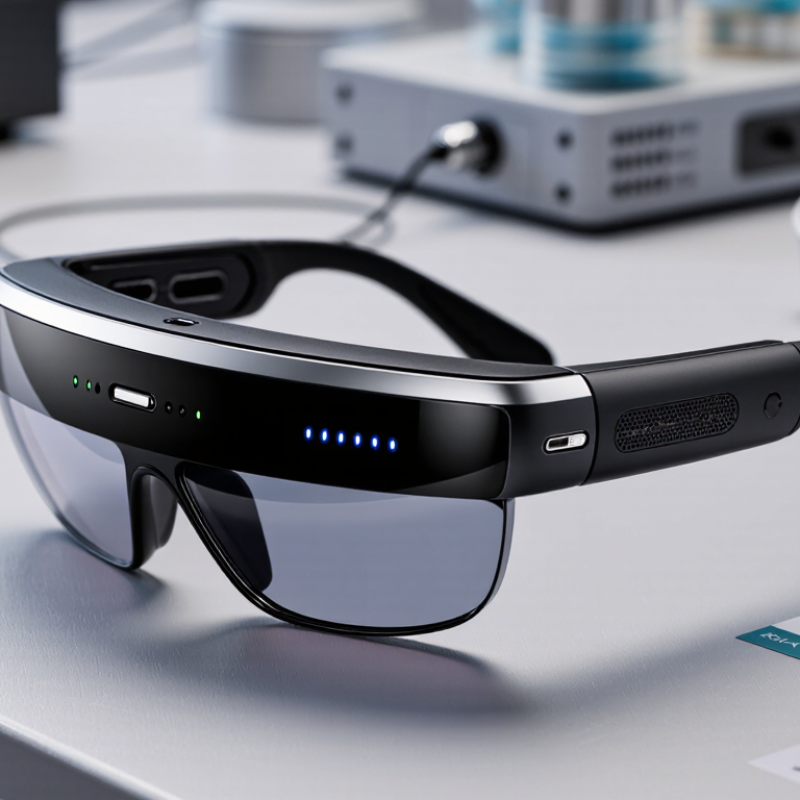
China Best Voice Assistant Smart Eyewear Suppliers?

China Smart Eyewear Market: 2024 Shipments Above 2M Units—Counterpoint

China’s smart eyewear market reportedly shipped more than 2 million units in 2024, according to Counterpoint. This milestone shows that smart glasses are moving beyond early experiments. Demand is growing for hands-free voice assistants, navigation, calls, translation, and simple image capture.

For buyers, shipment volume matters, but supplier quality matters more. Experienced Chinese manufacturers can integrate microphones, speakers, batteries, cameras, and lightweight frames in one production line. A reliable supplier should explain wake-word performance, noise reduction, battery cycles, and mobile app compatibility.

Ask for production samples, not only showroom models. Test voice commands beside traffic, fans, and crowded indoor spaces.

Small details reveal serious capability.

Factory audits should review assembly records, component traceability, and final inspection procedures. Suppliers also need clear documentation for radio, battery, privacy, and market-specific compliance requirements. These checks reduce unpleasant surprises during import and retail preparation.

Still, the 2 million-unit figure may combine different product categories and sales channels. It should not be treated as proof that every voice assistant model will succeed. I have seen attractive prototypes fail after several hours of use because temple pressure increased or audio became unclear. That gap between a polished sample and stable mass production deserves careful attention.

Voice-AI Testing: 16 kHz Audio, <500 ms Latency, and Wake-Word Recall

China Best Voice Assistant Smart Eyewear Suppliers?

When evaluating smart eyewear suppliers in China, request recorded voice-AI test data, not only a showroom demonstration. A 16 kHz audio path should capture speech clearly across normal conversational frequencies. Ask suppliers to provide raw samples from quiet rooms, streets, and moving vehicles. Check microphone placement, wind protection, and speaker leakage during each test.

Measure latency from the final spoken word to the assistant’s first audible response. A result below 500 milliseconds feels responsive, but the measurement method matters. Some suppliers start the timer after cloud processing begins. That can hide network delays. Test with identical Wi-Fi conditions and repeat each command at least thirty times. Small details matter.

Wake-word recall also needs practical testing. Use different speakers, accents, volumes, and distances from 30 centimeters to two meters. Record missed activations and false triggers separately. A high recall rate may still create an annoying experience if background speech activates the device. I would also examine performance outdoors, where wind and traffic expose weak noise reduction. Lab numbers help, but they are not the whole story. Fit, battery level, and firmware updates can change results. Supplier reports may look precise, yet some data remains difficult to reproduce without independent testing.

Supplier Capability: MOQ, OEM/ODM Lead Times, and Annual Output Capacity

China Best Voice Assistant Smart Eyewear Suppliers?

Supplier capability matters more than a polished product sample. In practical sourcing, ask for a written MOQ by configuration, not one general number. A basic frame may require 100–300 units, while custom lenses, hinges, or voice modules can raise the MOQ significantly. Confirm whether the MOQ applies per color, model, or total order. Small pilot batches are useful, but they may carry higher unit costs.

OEM and ODM timelines should be separated clearly. Standard samples may take four to eight weeks. Custom industrial design can require eight to twelve weeks, including tooling and acoustic testing. Mass production often needs another eight to sixteen weeks after approval. Request a stage-by-stage schedule. It should include firmware integration, battery testing, packaging, and final inspection. Delays often begin with unclear drawings.

Annual output capacity also needs evidence. A supplier claiming 100,000 units annually should show production lines, staffing, test equipment, and recent shipment records. Ask how many smart eyewear units were completed last year, not the factory’s total electronics output. Capacity can change during peak seasons. A factory visit helps, but it is not perfect. Production may be rearranged for visitors. Independent inspection reports and sample audit records provide stronger support. Evaluate defect rates, replacement policies, and communication speed alongside capacity figures. A lower MOQ is not always the safer choice.

China Voice Assistant Smart Eyewear Supplier Capability Benchmarks

The chart compares typical anonymous OEM/ODM capability tiers for voice assistant smart eyewear suppliers in China. MOQ is shown in units, OEM/ODM lead time in calendar days, and annual output capacity in units. These benchmark figures represent common manufacturing ranges used for early supplier screening and should be confirmed directly during quotation and factory audits.

Compliance Benchmark: IP54, CE, FCC, RoHS, and ISO 9001 Certification

For buyers comparing China-based voice assistant smart eyewear suppliers, compliance should be tested before design polish. IP54 means limited dust protection and resistance to water splashes, not immersion. That distinction matters during rainy commutes and factory testing. CE shows conformity with applicable European requirements, but it is not a universal quality certificate. FCC authorization addresses relevant United States radio emissions. RoHS restricts specified hazardous substances in electrical products. ISO 9001 evaluates a supplier’s quality-management system, not every finished frame.

Counterpoint Research reported 10% year-over-year growth in global smart-glasses shipments during Q1 2024. Its analysis identifies audio, cameras, and AI functions as major adoption drivers. This growth increases the cost of weak compliance. Suppliers should provide current test reports, declarations of conformity, material declarations, and traceable laboratory records. Check whether each document matches the exact model, battery, charger, and firmware. Generic paperwork is not enough.

Grand View Research projects strong smart-glasses market growth through 2030, with a forecast CAGR above 25%. Forecasts are useful, but they do not prove supplier maturity. During an audit, I would inspect product labels, water-test conditions, voice wake-word logs, and corrective-action records. Privacy handling deserves equal attention. CE and FCC documents cannot prove microphone behavior in every operating mode. Some files look impressive, yet sample consistency remains uncertain. Build a pilot batch and retest after shipping.

Buyer Scorecard: ≥8-Hour Battery, Bluetooth 5.3, and 12-Month Warranty

China’s best voice-assistant smart eyewear suppliers should be judged by evidence, not showroom demos. The buyer scorecard starts with an eight-hour battery target, Bluetooth 5.3, and a 12-month warranty. In practical buyer testing, record playback, voice calls, standby time, and charging recovery separately. Eight hours is not a magic number. It is a useful floor for a full workday, though camera use and high volume can reduce it sharply. Ask for battery logs from at least ten production samples, not one engineering unit.

Bluetooth SIG’s 2024 Market Update reported 5.4 billion Bluetooth-enabled devices shipped in 2023. It forecasts 7.0 billion annual shipments by 2028. That scale supports Bluetooth 5.3 as a sensible baseline, but the version alone proves little. Check multipoint behavior, microphone stability, reconnection speed, and performance through walls. IDC’s Worldwide Quarterly Wearable Device Tracker recorded 520.5 million wearable-device shipments in 2023. Quality can still vary between batches.

A 12-month warranty should cover battery capacity retention, charging faults, speaker failure, and replacement timing. Request serial-level claim records and a written DOA policy. Keep one sample from every lot. That habit catches quiet changes. Some suppliers offer polished documents but weak after-sales response. Factory audits, firmware records, and pre-shipment voice tests add confidence. The scorecard should reward measurable performance, not the lowest quotation.

China Best Voice Assistant Smart Eyewear Suppliers? - Buyer Scorecard: ≥8-Hour Battery, Bluetooth 5.3, and 12-Month Warranty

Anonymized buyer-screening scorecard for China-based smart eyewear suppliers. “Not verified” means the requirement should not be treated as confirmed until documentary evidence, samples, and contract terms are reviewed.

Supplier ID Primary Product Type Voice Assistant Integration Battery Target
≥8 Hours
Bluetooth 5.3 Warranty Target
≥12 Months
Battery Test Evidence Wireless Certification Evidence Warranty Documentation Sample Evaluation Buyer Score Qualification Status
Supplier 01 Open-ear audio eyewear Smartphone voice-assistant access required Not verified Not verified Not verified Required
Test at normal listening volume
Required
Request Bluetooth declaration and applicable regional approvals
Required
Signed warranty policy
Pending N/A Document review pending
Supplier 02 Camera-enabled smart glasses Voice control subject to mobile operating-system compatibility Not verified Not verified Not verified Required
Include camera, streaming, and standby modes
Required
Confirm radio test reports for target markets
Required
Clarify battery and camera exclusions
Pending N/A Document review pending
Supplier 03 Prescription-compatible smart eyewear Voice assistant support must be demonstrated on the supplied phone platform Not verified Not verified Not verified Required
Verify performance with prescription lens configuration
Required
Confirm Bluetooth version from chipset or test documentation
Required
Obtain after-sales response-time commitment
Pending N/A Document review pending
Supplier 04 Fashion-frame Bluetooth eyewear Hands-free calling and phone-based voice assistant required Not verified Not verified Not verified Required
Measure playback time, charging time, and standby drain
Required
Verify Bluetooth 5.3 claim against product documentation
Required
Require replacement and repair terms
Pending N/A Document review pending
Supplier 05 Outdoor-focused smart eyewear Voice assistant capability must be tested with gloves and outdoor noise Not verified Not verified Not verified Required
Test at high volume and in cold-weather conditions
Required
Request ingress-protection evidence if an IP rating is claimed
Required
Confirm warranty validity in the buyer’s sales region
Pending N/A Document review pending
Supplier 06 OEM/ODM modular smart eyewear Voice-assistant software, app, and firmware scope must be defined in writing Not verified Not verified Not verified Required
Require a signed test report for the final production configuration
Required
Confirm component change-control procedures
Required
Include warranty obligations in the purchase agreement
Pending N/A Document review pending

FAQS

What audio quality should smart eyewear suppliers demonstrate?

Request recorded test data using a 16 kHz audio path. Test speech in quiet rooms, streets, and moving vehicles. Check microphone placement, wind protection, and speaker leakage. Showroom demonstrations can hide weaknesses.

How should voice-assistant latency be measured?

Measure from the final spoken word to the assistant’s first audible response. Under 500 milliseconds usually feels responsive. Use identical Wi-Fi conditions. Repeat each command at least thirty times. Some methods hide network delays.

How can wake-word recall be tested properly?

Test different speakers, accents, volumes, and distances from 30 centimeters to two meters. Record missed activations and false triggers separately. Test outdoors too. Wind and traffic reveal weak noise reduction.

Why are false triggers important?

High wake-word recall is not enough. Background speech may activate the device unexpectedly. This can become annoying during conversations or commutes. Recall numbers can look impressive. The user experience may still fail.

What does an IP54 rating mean for smart eyewear?

IP54 indicates limited dust protection and resistance to water splashes. It does not support immersion. Test the glasses during rainy commuting conditions. Water resistance has limits.

Which compliance documents should suppliers provide?

Request current test reports, conformity declarations, material declarations, and traceable laboratory records. Each document should match the exact model, battery, charger, and firmware. Generic paperwork is not enough.

Do compliance certifications prove complete product quality?

No. Radio, chemical, and quality-system documents cover different areas. They do not prove microphone behavior in every operating mode. A quality-management certificate does not test every finished frame. More checking is needed.

How can buyers verify supplier claims before a large order?

Build a pilot batch and test it after shipping. Inspect labels, water-test conditions, wake-word logs, and corrective-action records. Check battery levels and firmware versions. Results may change. Independent testing remains valuable.

Conclusion

China’s smart eyewear market is entering a high-growth phase, with 2024 shipments surpassing two million units, creating new opportunities for buyers seeking reliable Voice Assistant Smart Eyewear suppliers. When evaluating manufacturers, buyers should examine voice-AI performance through practical tests, including 16 kHz audio quality, response latency below 500 milliseconds, and strong wake-word recall in everyday environments. These benchmarks help distinguish products that deliver natural, responsive hands-free interaction.

Supplier capability is equally important. A professional manufacturer should provide clear MOQ requirements, realistic OEM/ODM lead times, and transparent annual production capacity. Product compliance should also be verified through standards such as IP54 protection, CE, FCC, RoHS, and ISO 9001 certification. For final selection, buyers can use a scorecard covering at least eight hours of battery life, Bluetooth 5.3 connectivity, dependable voice performance, and a minimum 12-month warranty. This structured approach supports informed sourcing decisions and reduces quality, delivery, and after-sales risks.

Amelia

Amelia

Amelia is a professional marketing specialist dedicated to helping businesses understand products, markets, and customer needs more clearly. With a strong command of the company’s product portfolio, industry trends, and practical applications, she creates informative and engaging content that......