
Vue Smart Glasses
All Products
Eyeglasses
Sunglasses
Accessories
Vue Lite 3
How It Works
Lenses
Vue App
FSA, HSA & Insurance
About
Contact
Explore Top Picks Find a Store
0%

Hands-Free Calling Eyeglasses combine everyday eyewear with microphones, speakers, and wireless calling. For buyers comparing China-based suppliers, the challenge is finding more than a polished sample. Call clarity, battery life, frame comfort, and dependable production all matter. Small details matter.

Grand View Research valued the global smart glasses market at approximately US$1.93 billion in 2024 and projected strong growth through 2030. This is a broad smart-glasses estimate, not a dedicated forecast for calling eyewear. That distinction matters. Market numbers can set context, but they cannot verify a factory’s quality or delivery record.

At Meta Connect 2024, Mark Zuckerberg said glasses are “the ideal form factor for letting an AI see what you see and hear what you hear.” His remark addressed AI-enabled glasses, not supplier performance or calling quality. Still, it points to a useful design principle: glasses should work naturally while users stay engaged with their surroundings. Fit still matters.

When assessing China’s suppliers, request call samples in quiet and noisy settings, battery test conditions, materials information, and clear warranty terms. Ask whether the sample matches the production model. A crisp demonstration is not enough. Broad market reports offer helpful context, but supplier claims deserve independent checks. Even careful buyers may find that advertised performance and daily comfort do not always align. That gap deserves honest attention.
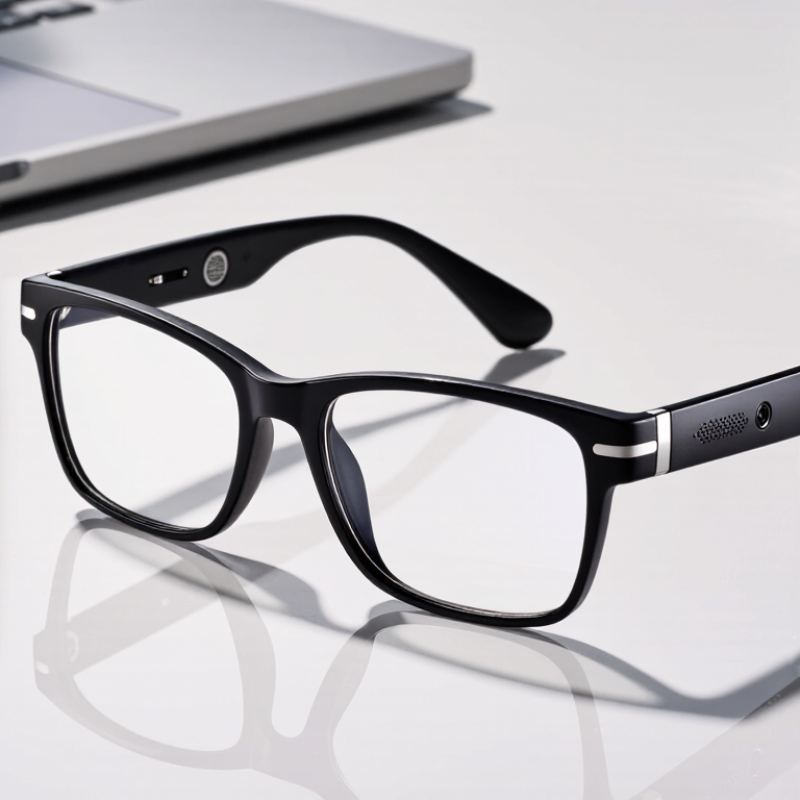
China Top Hands Free Calling Eyeglasses Suppliers?

What Hands-Free Calling Eyeglasses Are

Hands-free calling eyeglasses are frames with built-in microphones, small speakers, and wireless connectivity. They pair with a phone, letting the wearer answer calls without holding it. Sound usually comes from open-ear speakers near the temples, so the ears remain uncovered. No screen is needed. Buttons or touch controls on the arms can answer calls, adjust volume, or activate a phone’s voice assistant. Features differ between models, so buyers should check microphone placement, battery life, and phone compatibility.

In a quiet office, the caller’s voice may sound clear while both hands stay free for a notebook or a cup of coffee. Outdoors, traffic and wind can make conversation harder; microphone noise reduction helps, but it cannot remove every sound. People nearby may also hear some audio, and the frames can feel heavier than regular glasses. That is a real trade-off. For daily use, comfort matters as much as call quality: check the fit around the ears and nose, then try a short call before relying on them for a long commute. One detail is easy to overlook: prescription lenses and charging methods may vary by design.

How Calling Eyeglasses Connect and Function

Hands-free calling eyeglasses connect to a mobile phone through Bluetooth. During a call, the phone handles the cellular connection, while the glasses’ microphones capture speech and small speakers deliver the other person’s voice. The Hands-Free Profile (HFP) supports call audio and basic call controls. Fit matters. Microphone position near the temples can affect how clearly your voice reaches the caller.

Bluetooth SIG’s 2024 Market Update reports 5.4 billion Bluetooth device shipments in 2023 and projects annual shipments of 7.2 billion by 2028. These figures describe the wider Bluetooth market, not calling glasses alone, but they show how common the underlying connection technology has become. In real use, clarity still depends on microphone quality, software noise reduction, phone compatibility, and the surrounding environment. Traffic noise and wind can remain difficult, even with noise processing.

Tips: Pair the glasses in your phone’s Bluetooth settings, then make a short test call in a quiet room and outdoors. Check that the phone selects the glasses’ microphone, not its own. Keep the frames properly adjusted; a small shift can change microphone pickup. Battery life and comfort also matter during longer calls, and product claims may not reflect every user’s experience.

How Hands-Free Calling Eyeglasses Connect

Illustrative nominal range by Bluetooth power class—not a specification for any particular pair of glasses.

Calling glasses pair with a phone over Bluetooth. The phone routes call audio to the glasses, while the glasses’ microphone captures the wearer’s voice. Bluetooth power-class ranges are approximate; walls, interference, device design, and local conditions affect actual performance.

Key Features to Compare Across Suppliers

When comparing hands-free calling eyeglasses suppliers, look beyond a feature list. Ask how the frame handles voices in a quiet room and beside a busy road. Microphone placement, wind-noise processing, and speaker position can change call clarity. Request sample recordings or test a sample pair with a familiar phone. A polished demonstration is useful, but real-world testing matters more.

Fit matters. Compare frame weight, bridge shape, hinge strength, and whether the arms press after an hour of wear. Check battery life during calls, not only standby time, and ask how long charging takes. Small details count. Controls should be easy to find by touch, while accidental presses should be rare. If prescription lenses are needed, confirm lens compatibility and replacement options before ordering.

Supplier quality also depends on evidence. Ask for written specifications, inspection procedures, and clear details about warranty coverage and spare parts. Confirm whether the stated water resistance has been tested and under what conditions. A neat spec sheet can still leave gaps; I would not assume every supplier measures performance the same way. Compare samples under similar call, fit, and battery conditions, then record the results. One awkward fit can matter more than an extra feature.

Types of China-Based Hands-Free Eyeglasses Suppliers

China’s hands-free eyeglasses suppliers generally fall into several practical categories. OEM and ODM manufacturers build products to a buyer’s design or help develop a new frame, circuit, and feature set. They may coordinate Bluetooth modules, microphones, miniature speakers, batteries, and final assembly under one roof. Ask how they handle acoustic testing and whether engineering changes can be documented.

Optical or eyewear factories often know frame materials, hinge durability, and lens fitting better than consumer electronics. Some partner with electronics specialists for call functions, so clarify who is responsible when sound quality or battery performance falls short. Fit matters. A light frame can still press behind the ears after an hour.

Trading companies can connect buyers with several factories and simplify communication, but they may offer less direct control over production details. Component and assembly suppliers, meanwhile, may focus on a narrow stage, such as circuit integration or final inspection. Request a sample, inspect call clarity in a noisy room, and check charging behavior over repeated use. A polished catalog is not proof of consistent output. Supplier categories overlap, and that can make comparisons messy; verify capabilities with specific questions rather than relying on labels alone.

How to Evaluate Supplier Quality and Compliance

A reliable hands-free calling eyeglasses supplier should explain how each unit is tested, not just promise good quality. Ask for a written inspection plan covering microphone clarity, speaker output, Bluetooth stability, lens fit, and frame durability. Request sample units from a regular production run, rather than specially prepared samples. Small details matter.

Test calls in a quiet room and beside ordinary street noise. Check whether the other caller can understand speech, and note audio dropouts or uncomfortable pressure behind the ears. Open and close the hinges repeatedly, then inspect for looseness or sharp edges. A small trial batch can reveal patterns, though it cannot predict every production issue.

For compliance, ask which requirements apply in your sales markets and request current test reports, product declarations, and traceable records for key components. Verify that the documents match the exact model and configuration you plan to order. Radio performance, battery safety, and labeling may need separate evidence. A supplier that answers clearly and shares records is easier to assess, but paperwork alone is not proof. I would still check random units before shipment; that step takes time, and it can be missed when schedules get tight.

FAQS

What are hands-free calling eyeglasses?

They are frames with microphones, small speakers, and wireless phone connections. The ears stay uncovered. No screen is needed.

How do these glasses handle phone calls?

The phone manages the call, while the glasses capture and play audio. Buttons or touch controls can answer calls and adjust volume. Some models can activate a voice assistant.

Can people nearby hear the call?

Sometimes. Open-ear speakers may leak sound, especially in quiet rooms or at higher volume. Consider this in shared spaces.

How well do the glasses work outdoors?

Wind and traffic can make speech harder to understand. Noise reduction may help, but it cannot remove every sound. Try a short outdoor call.

What should I check before choosing a pair?

Check microphone placement, battery life, phone compatibility, frame weight, and comfort around the nose and ears. Prescription lens options and charging methods can vary.

How can I test call quality?

Pair the frames through the phone’s Bluetooth settings. Make a short call in a quiet room, then outdoors. Check that the glasses’ microphone is selected.

How can a supplier’s product quality be assessed?

Request a written inspection plan and samples from regular production. Test speech clarity, audio dropouts, hinge movement, sharp edges, and pressure behind the ears. A small batch helps, but it cannot reveal every issue.

What compliance records should I request?

Request current test reports, product declarations, and traceable records for key components. Confirm they match the exact model and configuration. Paperwork helps. It is not proof by itself.

Conclusion

Hands-Free Calling Eyeglasses combine eyewear with audio and microphone functions, allowing users to make and receive calls without holding a phone. They typically connect to a mobile device through wireless pairing, while built-in controls let users answer calls, adjust volume, or manage basic functions. When comparing suppliers, consider call clarity, microphone performance, battery life, comfort, durability, connection stability, and compatibility with common devices.

China-based suppliers may include manufacturers, original equipment producers, and trading companies, each offering different levels of customization and production support. Before choosing a supplier, review product specifications, sample quality, manufacturing capabilities, communication, and after-sales service. Ask for relevant quality and compliance documentation, and confirm that product claims match the tested features. A careful comparison can help buyers identify a dependable supplier and select eyeglasses suited to their intended use.

Evelyn

Evelyn

Evelyn is a dedicated marketing professional with a strong understanding of the company’s products, customers, and industry landscape. Through clear communication and thoughtful market analysis, she helps translate complex product features into practical value for businesses and everyday users. Her......