Bluetooth Smart Sunglasses are moving from novelty products toward practical wearable devices. They combine UV protection, open-ear audio, microphones, voice controls, and connected mobile applications. Grand View Research estimates the global smart glasses market at approximately US$1.7 billion in 2023. Its report also projects strong growth through 2030, with a compound annual growth rate above 27%. The category remains difficult to measure, however. Some reports include augmented-reality glasses, while others focus on audio-enabled eyewear.
This article examines the Top 10 Bluetooth Smart Sunglasses Manufacturers Worldwide. The evaluation considers product experience, optical quality, Bluetooth stability, battery performance, microphone clarity, software support, and manufacturing credibility. Bluetooth SIG’s 2024 Market Update reported 5.4 billion Bluetooth devices shipped in 2023. It expects annual shipments to reach about 7.6 billion by 2028. That wider ecosystem supports continued innovation in connected eyewear, but it does not guarantee excellent sunglasses.
Small details matter. A commuter may need clear calls beside heavy traffic. A cyclist may value physical controls and secure hinges. A prescription user may require reliable lens compatibility. Battery claims also deserve caution, because music volume, calls, and voice assistants reduce real-world endurance. Not every manufacturer publishes comparable testing results. That weakness makes direct ranking imperfect.
The selected companies are assessed through public product information, independent industry research, corporate disclosures, and user-focused performance indicators. Brand visibility alone is not enough. Durability, privacy-conscious design, after-sales service, and transparent specifications help separate established manufacturers from short-lived market entrants. This overview offers a practical comparison, while recognizing that the category is still evolving.
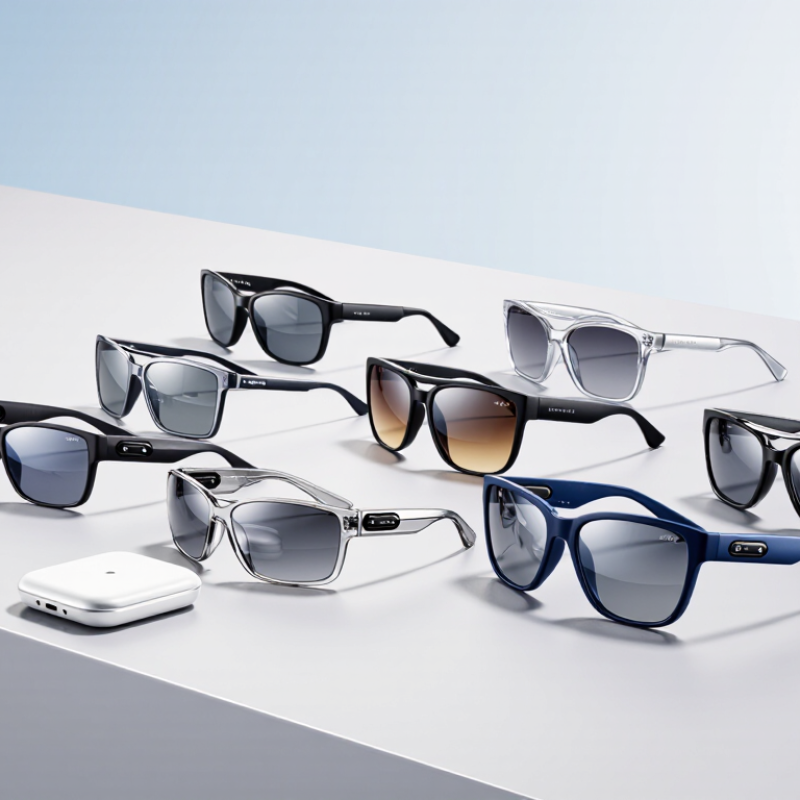
Bluetooth smart sunglasses are wearable eyewear with built-in Bluetooth connectivity. They usually combine open-ear speakers, microphones, touch controls, and rechargeable batteries. Users can hear music, answer calls, or receive navigation prompts without covering their ears. Most models connect to a smartphone through Bluetooth, while some include cameras or voice assistants. A display is not required.
Bluetooth SIG’s 2024 Market Update projects annual Bluetooth device shipments will reach 5.4 billion by 2028. This growth supports broader adoption of connected eyewear. However, smart sunglasses remain different from medical devices or full augmented-reality headsets. Their main value is discreet audio and hands-free communication. In practical use, battery life may last several hours, depending on volume, calls, and camera features. Fit also matters. Loose frames can reduce comfort and sound clarity.
Tips: Check Bluetooth version, microphone performance, charging time, and water-resistance claims. Confirm whether prescription lenses are supported. Read independent test reports, not only product specifications. Privacy deserves attention too. Camera-equipped eyewear can create social concerns, even when recording indicators are visible. I have found that open-ear audio sounds less immersive outdoors. That trade-off is easy to overlook. Manufacturers should publish measured battery results, but testing conditions often differ. Compare real-world reviews before choosing a supplier or product category.
| Rank | Anonymous Manufacturer Profile | Primary Market Region | Typical Product Focus | Bluetooth Standard | Typical Battery Runtime | Common Audio Features | Lens and Protection Options | Typical User Segment |
|---|---|---|---|---|---|---|---|---|
| 1 | Profile A | North America | Everyday audio sunglasses | Bluetooth 5.0–5.3 | Approximately 4–8 hours of active use | Open-ear speakersMicrophonesCall control | UV-protection lenses; clear, tinted, and polarized options are common | Consumers seeking hands-free calls, music, and outdoor convenience |
| 2 | Profile B | East Asia | High-volume consumer electronics models | Bluetooth 5.1–5.4 | Approximately 5–10 hours of active use | Stereo audioNoise-reduction microphonesVoice assistant support | UV400-rated lenses are widely offered; replaceable lens designs may be available | Mass-market users and mobile-device consumers |
| 3 | Profile C | Western Europe | Fashion-oriented smart eyewear | Bluetooth 5.0–5.3 | Approximately 4–8 hours of active use | Directional audioHands-free callsTouch controls | Fashion frames with UV protection; prescription-compatible versions may be offered | Style-conscious consumers and urban commuters |
| 4 | Profile D | East Asia | Sports and outdoor eyewear | Bluetooth 5.0–5.3 | Approximately 6–12 hours of active use | Open-ear audioWind-noise reductionPhysical buttons | Polarized, impact-resistant, and UV-protection lenses are common | Cyclists, runners, hikers, and recreational athletes |
| 5 | Profile E | North America | Camera-enabled smart sunglasses | Bluetooth 5.0–5.3, often paired with Wi-Fi | Approximately 3–6 hours depending on camera and audio use | MicrophonesSpeakersVoice commands | UV-protection lenses; tinted and transition-style options may be available | Content creators, travelers, and users interested in first-person capture |
| 6 | Profile F | Central and Eastern Europe | Industrial and professional eyewear | Bluetooth 5.0–5.3 | Approximately 6–10 hours of active use | Push-to-talkHands-free communicationEnvironmental audio | Safety-rated, tinted, clear, or prescription-compatible lenses may be specified by application | Field technicians, logistics teams, and workplace communication users |
| 7 | Profile G | East Asia | Display-capable smart eyewear | Bluetooth 5.1–5.4, commonly combined with Wi-Fi | Approximately 2–6 hours of active use | Audio playbackMicrophonesMobile-app control | Transparent, tinted, or optical display lenses depending on design | Navigation, information access, training, and enterprise applications |
| 8 | Profile H | Southern Europe | Premium lifestyle eyewear | Bluetooth 5.0–5.3 | Approximately 4–8 hours of active use | High-quality speakersDual microphonesApp-based equalizer | Polarized and UV-protection lenses; premium frame materials are common | Premium consumers, travelers, and leisure users |
| 9 | Profile I | Southeast Asia | Affordable private-label and OEM products | Bluetooth 5.0–5.2 | Approximately 3–8 hours of active use | Open-ear speakersCall answeringMusic control | Basic UV-protection lenses; interchangeable lenses may be available | Retailers, online sellers, and price-sensitive consumers |
| 10 | Profile J | Australia and Oceania | Outdoor lifestyle and marine-use eyewear | Bluetooth 5.0–5.3 | Approximately 5–10 hours of active use | Open-ear audioWind managementWater-resistant controls | Polarized and UV-protection lenses; water-resistant designs are common | Beach users, boaters, travelers, and outdoor enthusiasts |
They are wearable glasses with wireless connectivity, speakers, microphones, touch controls, and rechargeable batteries. A display is optional. They mainly provide open-ear audio and hands-free calls.
A wireless chipset links the sunglasses with a nearby smartphone. The phone sends music, calls, navigation prompts, and voice commands. Connection stability can weaken beyond normal operating range.
Yes, small speakers sit near the ears instead of sealing the ear canals. This helps users notice nearby sounds. Outdoor audio may feel less immersive, especially near traffic or strong wind.
Battery life often lasts several hours, depending on volume, calls, and camera use. Louder playback drains power faster. Real results vary.
Built-in microphones capture speech through openings in the frame. Noise reduction can improve call clarity around streets and light wind. Traffic noise may still affect conversations.
Check wireless version, microphone quality, charging time, water resistance, and connection reliability. Confirm support for prescription lenses. Independent testing matters more than attractive specifications.
Some models include cameras or voice assistants, but many provide audio only. Camera-equipped frames may create privacy concerns in social settings. Visible recording indicators do not remove every concern.
Loose frames can reduce comfort and make sound quieter. Poorly positioned speakers may cause discomfort. Hinges, heat, charging behavior, and battery aging deserve careful testing.
Future frames may use lower-power processors, adaptive lenses, and local voice features. Health sensors and smarter hands-free controls may also improve. However, battery capacity and prescription compatibility remain imperfect.
They should conduct repeated outdoor field trials, including windy streets and long calls. Testing should report battery cycles, water resistance, privacy practices, and repair options. Specifications alone can mislead.
Bluetooth Smart Sunglasses combine stylish eyewear with wireless audio, hands-free communication, voice assistance, and selected smart features. This article explains how these products use Bluetooth connectivity, miniature speakers, microphones, batteries, and control systems to deliver a practical wearable experience while maintaining comfort, durability, and visual clarity. It also introduces the key criteria for evaluating global manufacturers, including product design, audio performance, battery life, connectivity stability, lens options, safety considerations, production capacity, customization services, quality control, and after-sales support.
The overview presents ten leading types of Bluetooth Smart Sunglasses manufacturers worldwide without focusing on brand names, highlighting their different strengths in technology development, optical expertise, manufacturing efficiency, and market adaptability. It also examines major industry trends, such as improved sound quality, lighter materials, longer battery performance, enhanced voice interaction, and integration with other wearable devices. Finally, the article considers future development opportunities and the importance of responsible innovation, user comfort, privacy protection, and compliance with applicable regulations.