
Buying IPX5 Waterproof Audio Glasses requires more than trusting a bold product label. The IEC 60529 standard defines IPX5 as protection against water jets. It does not guarantee safe immersion, swimming, or heavy underwater use. A shower splash may be acceptable. A dropped pair is another story.
Market research from Grand View Research identifies smart glasses as a fast-growing wearable technology category. IDC reports that practical daily functions strongly influence consumer adoption. Audio quality, battery life, comfort, and reliable controls matter more than futuristic styling. Jitesh Ubrani, an IDC research manager covering consumer technology, has emphasized this practical direction: “The value of smart glasses depends on useful experiences people can adopt every day.” That principle applies directly here.
This guide examines seven buying decisions for IPX5 Waterproof Audio Glasses, including water protection, speaker placement, microphone clarity, lens comfort, battery performance, charging design, and warranty support. Look closely at the details. Does the charging port have a secure cover? Can you hear navigation prompts beside traffic? Do the frames remain comfortable after two hours? Small flaws become obvious quickly.
One caution is easy to miss. IPX5 is not waterproofing. Manufacturers may also use different testing conditions, and marketing language can sound stronger than the certification. Check the technical sheet, not only the product title. The right pair should survive realistic splashes while delivering clear sound and dependable comfort. Expectations still need adjusting. Even excellent audio glasses have limits.
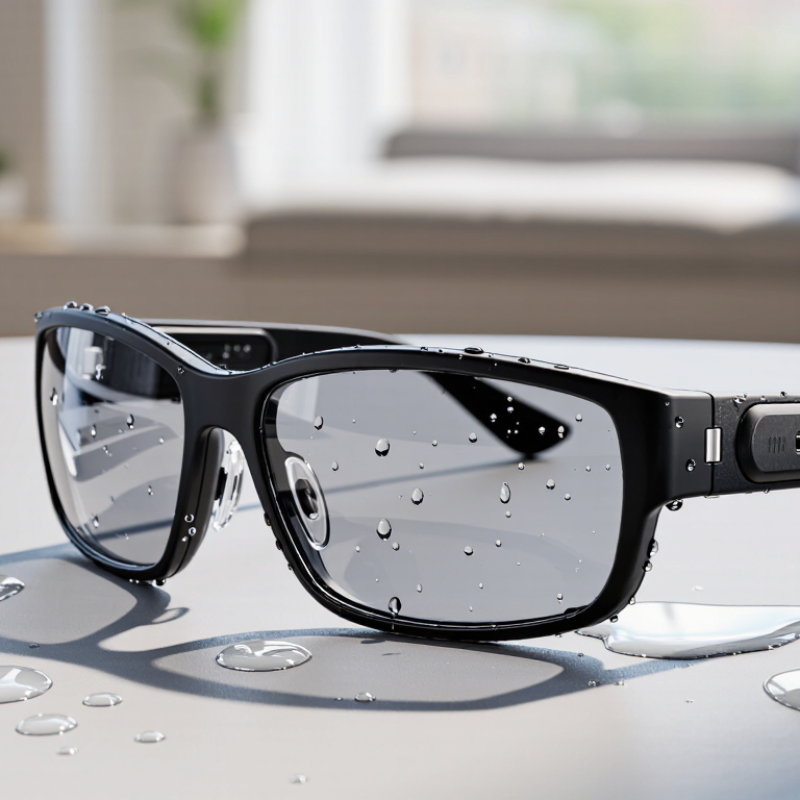
7 Tips for Buying IPX5 Waterproof Audio Glasses
Understanding IPX5 protection starts with the IEC 60529 standard. IPX5 means a device can resist water jets from any direction. The test commonly uses about 12.5 liters of water per minute for at least three minutes. It does not mean waterproof in every situation. IPX5 also excludes immersion testing, so swimming remains a poor idea.
In practical use, IPX5 audio glasses should handle rain, splashes, and sweaty walks. I would still check the charging port after outdoor exercise. Salt and sweat can leave residue around tiny openings. Look for covered ports, clear care instructions, and microphones positioned away from direct spray. A tight fit matters too. Water protection cannot fix loose arms or distorted sound.
Technical ratings deserve careful reading. “Water-resistant” is not the same as “sealed forever.” The IEC report measures controlled laboratory conditions, not muddy trails or repeated beach use. Some product claims feel broader than the test itself. That is worth questioning. Check whether the rating covers the complete glasses, including buttons and charging accessories. Also review the warranty, because liquid damage may be excluded. A simple splash test at home is unnecessary and risky. Better evidence comes from the certification details and the seller’s testing records.
When buying IPX5 waterproof audio glasses, start with sound, not the water claim. IEC 60529 defines IPX5 as protection against water jets. It does not promise safe submersion. In a practical check, listen beside a running fan, then outdoors. Voices should remain clear, while music should retain bass without rattling. Open-air speakers naturally leak sound. That is normal, but excessive leakage can disturb nearby people.
Speaker placement matters more than impressive specifications. The drivers should aim toward your ears, not your cheeks or temples. I look for balanced speech at low volume and consistent output when I turn my head. The World Health Organization recommends keeping personal listening below 80 dB for up to 40 hours weekly. A volume limiter helps. Still, advertised decibel figures can be difficult to verify at home. That deserves skepticism.
Comfort decides whether the glasses become daily equipment. Check hinge pressure, nose-pad stability, lens weight, and heat after thirty minutes. NIOSH uses 85 dBA over eight hours as a recommended exposure limit. Risk rises as exposure continues. Audio glasses should not pinch behind the ears or slide during a walk. Try them with your prescription frame, if applicable. My first fitting felt secure, yet caused temple fatigue later. A shorter trial may hide that problem. Look for controls you can operate without looking, especially near traffic. Waterproofing helps in rain; it cannot repair poor acoustics, unsafe volume, or a painful fit.
When buying IPX5 waterproof audio glasses, examine battery performance beyond the advertised number. Laboratory figures often assume moderate volume and stable connections. Real use can differ. Test whether the glasses last through a commute, a workout, and several calls. Six hours may feel sufficient, but frequent charging becomes irritating. Check standby drain too. Some devices lose power overnight, even when unused.
Tip 1: Inspect the charging system carefully. A magnetic connector can be convenient, but it may detach inside a bag. A sealed USB port offers flexibility, yet its cover can wear over time. Ask how long a full charge takes and whether a short ten-minute charge provides useful playback. Avoid charging wet glasses. IPX5 protects against water jets, not immersion, rain damage forever, or careless storage.
Tip 2: Evaluate Bluetooth stability in realistic spaces. Walk through a busy station, place your phone in a pocket, and test connection recovery after leaving range. Clear speech matters as much as music quality. Wind can overwhelm microphones, especially on bicycles or open paths. Multipoint pairing sounds helpful, but switching between devices may occasionally fail. I would record these small frustrations instead of trusting a polished demonstration. Tip 3: Review battery aging information and warranty terms. Capacity usually declines with repeated cycles. That detail is easy to overlook. Reliable sellers should provide charging specifications, safety guidance, and measurable testing conditions rather than vague promises.
| Tip | Evaluation Dimension | Useful Benchmark or Fact | What to Check Before Buying | Why It Matters |
|---|---|---|---|---|
| 1 | IPX5 Water Protection | IPX5 protection means the device can resist water jets from any direction under standardized test conditions. It is not rated for immersion. | Confirm that the IPX5 rating applies to the complete audio glasses, including speakers, controls, charging ports, and seams. | It helps protect against sweat, light rain, and water splashes, but the glasses should not be used for swimming or submerged. |
| 2 | Battery Playback Life | A practical target for wireless audio glasses is about 4–8 hours of music playback per charge. Actual runtime changes with volume, call use, Bluetooth conditions, and temperature. | Look for separate figures for music playback, phone calls, standby time, and battery life with smart features enabled. | Longer playback reduces the risk of losing audio during commuting, exercise, travel, or a full workday. |
| 3 | Charging Time | Many compact audio wearables require approximately 1–2 hours for a full charge, although the exact time depends on battery capacity and charging design. | Check the stated full-charge time, charging connector, cable requirements, and whether the product supports charging from common USB power sources. | Shorter charging times make the glasses more convenient when they need a quick recharge before use. |
| 4 | Battery Capacity and Health | Battery capacity is usually listed in milliampere-hours (mAh), but capacity alone does not determine playback time. Power efficiency and speaker volume also affect runtime. | Prefer products that publish both battery capacity and tested playback time. Check whether the battery is rechargeable and whether replacement service is available. | Clear specifications make it easier to compare products and estimate long-term usability. |
| 5 | Bluetooth Version and Range | Bluetooth 5.0 and later generally provide improved power efficiency and connection performance compared with older Bluetooth versions. Open-air range is often advertised up to about 10 meters, but walls and interference can reduce it. | Check the Bluetooth version, supported profiles such as A2DP and HFP, connection stability, and compatibility with the intended phone or tablet. | A reliable connection helps prevent audio dropouts and supports music playback, calls, and voice-assistant functions. |
| 6 | Call and Microphone Performance | Open-ear speakers do not seal the ear, so surrounding noise can affect perceived audio and call clarity. Microphone quality depends on placement, wind reduction, and signal processing. | Look for multiple microphones, environmental-noise processing, voice-call test results, and controls for answering or ending calls. | Good microphone performance is important for outdoor calls, navigation prompts, and voice commands. |
| 7 | Controls, Comfort, and Charging-Port Design | Physical buttons or touch controls should remain usable during movement. The charging port should be protected by a secure cover or charging interface when water resistance is claimed. | Check frame weight, nose-pad comfort, hinge strength, button accessibility, charging-port protection, and whether charging is blocked while the device is wet. | Comfort and safe charging affect daily convenience, product durability, and protection against moisture-related damage. |
When buying IPX5 waterproof audio glasses, study the frame before focusing on sound. A rigid frame usually protects internal components better. Check the hinges for smooth movement and minimal side-to-side play. Look closely at charging ports, speaker openings, and control buttons. IPX5 resists water jets, but it does not permit swimming or immersion. Confirm the testing details instead of trusting vague waterproof claims.
Fit affects comfort, stability, and audio clarity. The bridge should rest securely without pressing your nose. Temple arms must sit evenly behind your ears. Wear the glasses for ten minutes and notice pressure near your temples. Try gentle head movements. They should stay stable. Lighter frames often feel better, although extremely light materials can seem less substantial. I once chose comfort over stiffness and later regretted the loose hinge.
Durability deserves practical testing. Look for reinforced joints, scratch-resistant surfaces, and replaceable nose pads. Examine whether the lens shape suits your daily lighting conditions. Clear lenses support indoor use, while tinted or polarized options may help outdoors. Prescription compatibility also matters. Ask about lens replacement and adjustment support. Read independent test results when available, especially details about sweat, rain, and repeated handling. Do not ignore maintenance instructions. Wiping moisture away after use may extend the frame’s life, even when the product passes an IPX5 test.
When I test IPX5 waterproof audio glasses, I start with the controls, not the sound. Buttons should be easy to find by touch while walking. A raised play button helps when my fingers are damp. Voice prompts can help, but overly loud prompts may distract near traffic. Touch controls look convenient. Rain drops can confuse them, though. I prefer physical buttons with clear resistance and simple functions.
IPX5 protects against water jets, not swimming or full submersion. That difference matters during sudden rain. Check whether the frames have secure hinges and a firm fit during movement. Open-ear audio can preserve environmental awareness, but it does not remove safety risks. Keep the volume low enough to hear bicycles, alarms, and nearby voices. A volume limit, automatic pause feature, or clear warning system adds practical value. These features sound minor until attention is divided.
Warranty terms often reveal more than advertising claims. Look for coverage of charging faults, speaker failure, frame damage, and battery problems. Confirm the warranty period and repair process before paying. Some policies exclude moisture damage, even when the product carries an IPX5 rating. That wording deserves careful reading. I have sometimes assumed waterproof meant worry-free, and that was careless. Overall value depends on comfort, control reliability, battery performance, and replacement support. A cheaper pair becomes expensive if its controls fail after a few wet commutes. A longer warranty helps, but only when the conditions are realistic.
IPX5 protects against water jets. It does not support swimming or full immersion. Dry the glasses after rain.
Listen beside a running fan, then test outdoors. Voices should stay clear, and bass should avoid rattling.
Some leakage is normal because the speakers remain outside your ears. Excessive volume may disturb people nearby.
The drivers should aim toward your ears. If they point toward your cheeks, speech may sound weak.
Use a comfortable, moderate volume and consider a volume limiter. Advertised decibel figures can be difficult to verify at home.
Wear the glasses for thirty minutes. Check temple pressure, nose-pad stability, lens weight, and heat buildup.
The bridge should rest comfortably, while the arms sit evenly behind your ears. Move your head gently. They should stay stable.
Check smooth hinges, firm joints, scratch-resistant surfaces, and replaceable nose pads. Clear lenses suit indoor use; tinted lenses may help outdoors.
Examine charging ports, speaker openings, and buttons closely. Read independent testing details about rain, sweat, and repeated handling.
Not always. My first fitting felt secure, but caused temple fatigue later. A longer trial may reveal pressure and slipping.
Buying IPX5 Waterproof Audio Glasses requires more than checking whether they can withstand splashes. Start by understanding that IPX5 protection is designed for water jets and light rain, but it does not mean the glasses are suitable for submersion. Next, assess sound quality, speaker clarity, volume balance, and listening comfort, especially if you plan to wear them for extended periods. Battery capacity, charging time, connection stability, and Bluetooth performance are also important for dependable daily use.
Pay attention to frame weight, fit, hinge strength, and overall durability, while choosing lens options that match your lighting and vision needs. Easy-to-use controls, hands-free calling, automatic volume limits, and other safety features can improve convenience without distracting you from your surroundings. Finally, compare warranty coverage, included accessories, expected lifespan, and price to judge overall value. The best pair of IPX5 Waterproof Audio Glasses should combine practical water resistance, comfortable design, reliable audio, and features that suit your everyday activities.