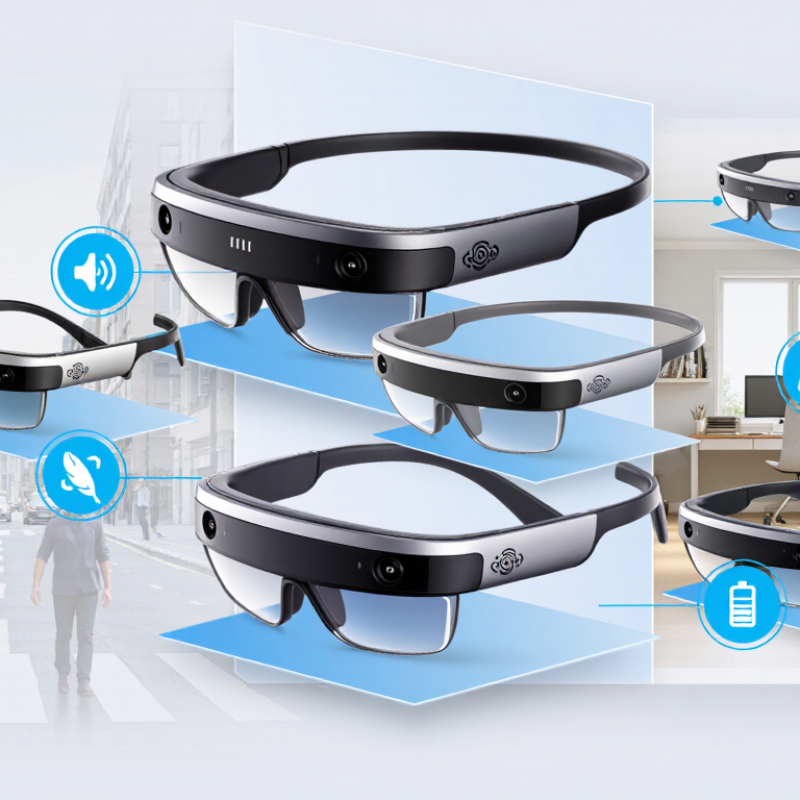
Choosing Open-Ear Bluetooth Eyeglasses means balancing clear audio, comfortable fit, and practical eyewear design. The best pair should let you hear a podcast while remaining aware of a nearby conversation or passing traffic. Yet open-ear sound has limits. Busy streets, strong wind, and crowded rooms can make listening less clear.
Don Norman, a prominent design expert, wrote, “Good design is actually a lot harder to notice than poor design.” His observation is not about Bluetooth glasses specifically, but it offers a useful test: do the frames feel natural after an hour, or do they press behind your ears? Fit matters. Check the weight, hinge pressure, lens options, and whether the controls are easy to find without looking. Small details count.
Sound matters too. Compare speech clarity, maximum volume, microphone performance, battery life, and Bluetooth stability. If possible, test calls in a quiet room and outdoors; a microphone that sounds crisp indoors may struggle with wind. Product specifications help, but they do not tell the whole story. Reviews can also overlook individual differences in head shape and hearing. That deserves a second look. This guide will help you weigh those trade-offs, check claims against your daily needs, and choose Open-Ear Bluetooth Eyeglasses that suit your routine—not just a polished product page.
Define Open-Ear Bluetooth Eyeglasses and Their 2.4 GHz Wireless Link
Open-ear Bluetooth eyeglasses combine ordinary-looking frames with miniature speakers near the ears. They send sound toward the ear without sealing the ear canal. You can hear a spoken navigation prompt while still noticing a bicycle bell or a colleague nearby. The trade-off is privacy: people close to you may hear some audio, especially in a quiet room.
Their wireless link uses Bluetooth radio in the 2.4 GHz industrial, scientific, and medical band. The Bluetooth Core Specification defines the 2.4 GHz operating range; compatible devices establish a connection and exchange audio over radio channels. Bluetooth frequency hopping helps devices navigate interference, but it cannot make every connection flawless. Wi-Fi traffic, walls, and even a phone tucked behind your body may affect performance. Small detail, real impact.
Bluetooth SIG’s 2024 Market Update forecasts annual shipments of Bluetooth audio-streaming devices to reach 1.4 billion by 2028. That figure signals broad adoption, not proof that every pair of audio glasses will sound clear or stay connected. When comparing models, test them with your own phone and in a busy place. Check call clarity, fit, and connection stability. One thing is easy to overlook: open-ear sound can feel less immersive outdoors, and that may be a fair trade for hearing your surroundings.
Check LE Audio and LC3, Designed for Similar Quality at 50% Lower Bitrate
How to Choose the Best Open Ear Bluetooth Eyeglasses?
Check LE Audio and LC3, Designed for Similar Quality at 50% Lower Bitrate
When comparing open-ear Bluetooth eyeglasses, check whether both the glasses and your phone support LE Audio. Its LC3 codec is designed to deliver audio quality similar to SBC at roughly half the bitrate. That can help transmit sound more efficiently. It does not guarantee better sound in every situation. Codec settings, fit, and background noise still matter.
Open-ear speakers sit near your ears, leaving the room’s sounds audible. On a busy street, traffic may mask quiet speech, even with an efficient codec. In a calm room, spoken podcasts may sound clear, while bass can feel lighter than with sealed headphones. Try a familiar voice recording at a comfortable volume. Specifications are useful, but they are not a listening test.
Evaluate Sound Output, Frequency Response, and Open-Ear Sound Leakage
How to Choose the Best Open Ear Bluetooth Eyeglasses?
Evaluate Sound Output, Frequency Response, and Open-Ear Sound Leakage
Listen to familiar audio at a comfortable volume before judging sound output. Voices should remain clear, while music should not feel thin or harsh. Test in a quiet room, then near ordinary background noise, such as a fan. Open-ear designs cannot block the world, and louder volume may make nearby sounds harder to hear.
Frequency response describes how well low, middle, and high tones come through. Listen for speech clarity, steady bass, and crisp details without sharpness. A short listening test is useful, though it is not a laboratory measurement. I sometimes miss small differences in a busy shop, so compare the same track in similar conditions. Check sound leakage, too: ask someone nearby whether they can hear your audio at your usual setting.
Tips: Play a spoken podcast at low and moderate volume. Ask a friend to stand about an arm’s length away in a quiet room. If words are clearly audible to them, lower the volume or try another fit. A snug fit may help, but comfort matters; glasses that press your temples are not a good trade.
Compare Battery Runtime and IEC 60529 Water Ratings, from IPX4 to IPX7
When comparing open-ear Bluetooth eyeglasses, treat battery runtime as a real-use estimate, not a promise. A quoted figure may reflect continuous playback at a moderate volume, with few calls and a stable connection. In daily use, louder audio, frequent calls, and cold weather can shorten it. Check whether the stated hours include standby time or only active listening. Small details matter. If possible, compare test conditions across models; otherwise, the numbers may not be comparable.
Water ratings follow IEC 60529, but the “X” in IPX4 or IPX7 means dust protection was not specified. IPX4 indicates resistance to splashing water, while IPX7 generally covers temporary immersion under controlled test conditions, often up to one metre for 30 minutes. That does not make glasses suitable for swimming, and seals can wear over time. Not underwater gear. For sweaty walks or light rain, an IPX4 rating may be enough; heavier exposure calls for closer scrutiny of the maker’s care instructions. I would still remove the glasses before rinsing them under a tap. Ratings describe laboratory tests, not every real-world accident.
How to Choose the Best Open Ear Bluetooth Eyeglasses? - Compare Battery Runtime and IEC 60529 Water Ratings, from IPX4 to IPX7
Rating
IEC 60529 water protection
What it may mean for everyday use
Battery runtime comparison
Buying check
IPX4
Protected against water splashing from any direction under the test conditions.
May suit light splashes or perspiration. It is not an immersion rating.
The water rating does not specify battery life. Compare the stated playback runtime for each model.
Check whether the rating applies to the complete glasses and whether the manufacturer gives care restrictions.
IPX5
Protected against water jets from a nozzle under the test conditions.
Offers more water-jet protection than IPX4, but does not certify protection against immersion.
No fixed runtime is associated with IPX5; battery capacity and product design determine playback time.
Look for a separate runtime claim and note the conditions used to measure it, such as volume level.
IPX6
Protected against powerful water jets under the test conditions.
Provides a higher jet-protection level than IPX5; it does not, by itself, establish immersion protection.
The rating says nothing about playback hours. Compare manufacturer runtime claims independently.
If both powerful jets and immersion matter, check for explicit certification covering both tests.
IPX7
Protected against temporary immersion in water, generally up to 1 metre for 30 minutes under the specified test conditions.
Indicates tested temporary-immersion protection, not suitability for swimming or all real-world water exposure.
IPX7 does not imply longer or shorter battery runtime. Check the stated hours and charging-case details separately.
IPX7 alone does not confirm IPX5 or IPX6 jet protection; look for an additional rating if that protection is needed.
Important: The “X” means that a dust-protection rating is not specified in the IP code shown. IEC 60529 water ratings do not measure battery runtime. Actual playback time varies with factors such as volume, call use, Bluetooth connection, battery age, and operating conditions. Always check the product’s own test information and care instructions.
Verify Fit, Lens Options, Microphones, and Bluetooth Range Before Buying
A comfortable fit matters more than a sleek frame in a product photo. Check the bridge and temple arms for pressure after wearing the glasses for at least twenty minutes. They should stay in place when you look down, but not pinch behind your ears. Small adjustments can help, though not every frame is easily adjustable.
Lens options affect daily use. Confirm whether the glasses accept prescription lenses, and check the available tint or photochromic choices. If you work outdoors, compare how quickly the lenses darken and clear; performance can vary with conditions. Ask an optician to verify compatibility before ordering. A good fit is personal.
Microphones deserve a real-world test. Record a short voice note near a quiet fan, then try a call outdoors with light traffic nearby. Listen for muffled speech or wind noise. Also check Bluetooth range in an open room, then through a wall or two. Walls and other wireless devices can reduce stability, so advertised range may not match your home. That can be frustrating. Try the glasses with your own phone, and check whether audio remains steady as you move around.
FAQS
What are open-ear Bluetooth eyeglasses?
They have small speakers near the ears and do not seal the ear canal. You can hear audio while noticing nearby sounds, such as a bicycle bell. Nearby people may hear some audio too.
How does their 2.4 GHz wireless link work?
Compatible devices use radio channels to connect and exchange audio. Frequency hopping can help manage interference, but it cannot prevent every interruption. Small detail, real impact.
Can walls or other devices affect the connection?
Yes. Wi-Fi traffic, walls, and a phone behind your body may weaken the link. Test the glasses in places where you expect to use them.
What should I check for a comfortable fit?
Wear them for at least twenty minutes. Check for pressure at the bridge and behind your ears. They should stay in place when you look down without pinching. Fit is personal.
Which lens options should I verify?
Check whether the frames accept prescription lenses and offer suitable tint or photochromic choices. If you work outdoors, ask how quickly the lenses darken and clear. An optician can confirm compatibility.
How can I assess microphone quality?
Record a short voice note near a quiet fan, then make a call outdoors near light traffic. Listen for muffled speech and wind noise. Real conditions matter.
How should I test Bluetooth range?
Try the glasses in an open room, then move behind a wall or two. Check whether audio stays steady as you move with your own phone. Advertised range may not match your home. Not perfect.
What should I expect from open-ear sound outdoors?
Audio may feel less immersive outside, but you can still notice sounds around you. That trade-off may suit some routines better than sealed listening. It may not suit everyone.
Conclusion
Choosing Open-Ear Bluetooth Eyeglasses starts with understanding how they work: small speakers direct audio toward your ears while Bluetooth uses a 2.4 GHz wireless link to connect with compatible devices. Check whether the glasses support LE Audio and the LC3 codec, which is designed to deliver similar perceived audio quality at a substantially lower bitrate, potentially around half that of some earlier codecs. Compare sound output and frequency response, and consider how much audio may leak to people nearby, especially at higher volume.
Next, assess practical details for daily use. Look at battery runtime for both listening and standby, and check the water-resistance rating under IEC 60529: IPX4 covers splashes, while higher ratings such as IPX7 indicate greater protection under specified test conditions. Try the frame for comfort and stability, confirm that lens options suit your needs, and review microphone clarity and Bluetooth range. Matching these features to your routine will help you choose a comfortable pair with reliable connectivity and appropriate protection.
Charlotte is a seasoned marketing professional with a strong understanding of product strategy, customer needs, and digital communication. As a valued member of our team, she combines market insight with practical product knowledge to create clear, useful, and engaging content for our website.......