
Vue Smart Glasses
All Products
Eyeglasses
Sunglasses
Accessories
Vue Lite 3
How It Works
Lenses
Vue App
FSA, HSA & Insurance
About
Contact
Explore Top Picks Find a Store
0%

Activity Tracking Smart Eyewear promises to put useful workout data where it is easiest to see: in your field of vision. Yet a bright display does not guarantee accurate measurements. For runners, cyclists, and gym users, heart-rate reliability, GPS performance, comfort, battery life, and clear privacy controls matter more than a crowded feature list.

The demand for wearable measurement is well established. The American College of Sports Medicine’s 2025 Worldwide Survey of Fitness Trends ranked wearable technology as the leading fitness trend. Separately, the World Health Organization reported that about 1.8 billion adults worldwide were insufficiently active in 2022. These figures describe broader health and fitness patterns, not proof that smart glasses improve exercise habits. That distinction matters.

The best choice in 2026 will depend on how well each device performs during real movement. Does the frame stay secure during a sweaty run? Can you read pace data in bright sunlight without losing attention on the road? And do its measurements agree with a trusted watch or chest strap? Small differences become obvious after an hour outside. Some product claims may sound impressive, but independent testing and transparent specifications deserve more weight. This guide compares leading options by tracking accuracy, comfort, safety-minded display design, compatibility, and overall value. The trade-offs are real. No single pair will suit every athlete, and current evidence for glasses-based fitness tracking remains less mature than evidence for established wrist wearables.
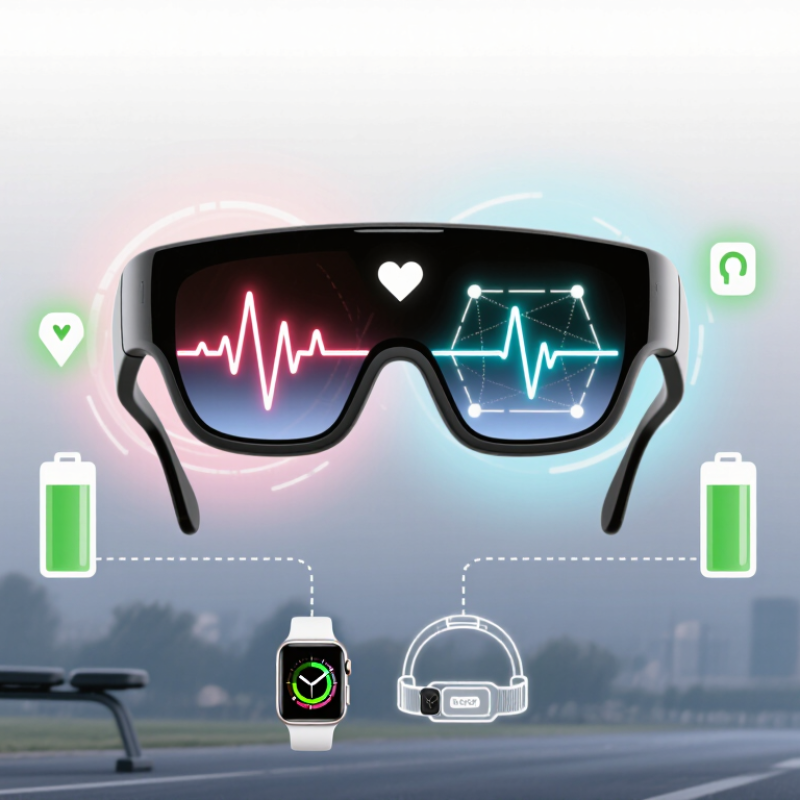
What Is the Best Activity Tracking Smart Eyewear in 2026?

Define Activity-Tracking Smart Eyewear and Its Core Sensors

Activity-tracking smart eyewear is glasses that use onboard sensors to estimate movement and, in some designs, physiological signals. An accelerometer detects changes in speed and direction, helping identify steps, walking, or head movement. A gyroscope measures rotation, adding context when the wearer turns or moves their head. Some frames include optical sensors that estimate pulse from changes in reflected light near the temple. GPS may come from a paired phone rather than the glasses themselves.

The sensor list is only part of the story. Fit, walking style, and loose frames can all affect readings; calorie estimates are especially approximate. Small shifts matter. The World Health Organization’s 2024 physical activity fact sheet estimated that 31% of adults worldwide—about 1.8 billion people—were insufficiently active in 2022, underscoring why practical tracking tools attract attention. In the American College of Sports Medicine’s 2025 Worldwide Fitness Trends survey, wearable technology ranked first. That survey reflects professional interest, not proof that glasses measure every activity accurately. A useful device should state which signals it records and distinguish measured data from estimates. The definition sounds tidy; real movement is messier.

Contextualize the Category with Counterpoint’s 210% Smart-Glasses Growth in 2024

Counterpoint reported that smart-glasses shipments rose 210% year over year in 2024. That surge signals growing interest, not automatic fitness accuracy. Activity-tracking eyewear faces a practical test: can it measure movement consistently while staying comfortable from a morning commute to an evening walk? Useful, but incomplete. Growth may reflect improved styling, hands-free features, or wider availability—not better step counts.

To judge the best option in 2026, look for step, active-minute, and heart-rate tracking, plus independent testing against a reference device. Try the glasses during brisk walking and stair climbing; loose frames can shift and produce unreliable readings. Check battery life with tracking enabled, not just standby claims. Test phone syncing, prescription-lens comfort, and whether key metrics require a subscription. Small details matter. A polished demonstration can hide weak sensors or an awkward fit, and one week of use is not proof of long-term reliability.

Tips: Compare readings across several ordinary walks. Note frame pressure after an hour. Treat unusually precise health claims cautiously, and check how often the eyewear needs charging.

Compare Tracking Accuracy, Battery Life, Comfort, and App Compatibility

The best activity-tracking smart eyewear in 2026 depends on how reliably it measures your routine. Accuracy can vary with frame fit, sensor placement, and movement. During a brisk walk, compare its step count with a trusted tracker over several days. Small differences matter. A short test cannot prove precision, though; repeat it across walks, workouts, and ordinary errands.

Battery life is easiest to judge against your own schedule, not just a quoted maximum. Continuous tracking, audio, and frequent notifications may shorten the time between charges. Check whether the eyewear lasts through a typical day, including your commute and an evening walk. Comfort matters just as much. Pressure at the temples or a sliding frame can become distracting after an hour. Try them indoors.

App compatibility can make useful data easier—or harder—to use. Confirm support for your phone’s operating system, and check whether activity history syncs consistently. Clear weekly charts and simple data export are practical advantages. Some readings may still be estimates, especially during irregular movement. That limitation deserves attention. A polished app cannot fix a poor fit or inaccurate sensors.

Assess Activity Metrics Against WHO’s 150–300-Minute Weekly Exercise Guideline

The best activity-tracking smart eyewear should make the WHO target easy to check: adults should complete 150–300 minutes of moderate activity weekly, or 75–150 minutes of vigorous activity. The WHO’s 2022 Global Status Report on Physical Activity warns that nearly 500 million preventable noncommunicable disease cases could emerge worldwide between 2020 and 2030 if inactivity does not improve. That makes useful tracking more than a step count. Look for weekly minutes split by intensity, clear trends, and a simple way to review progress after a walk or bike ride. Small details matter. A walk to the bus may count, but only if the device classifies its effort sensibly.

ACSM’s 2025 Worldwide Fitness Trends survey placed wearable technology at the top of its fitness trends list, reflecting strong demand for personal activity data. Yet more data does not guarantee better measurement. In a 2017 Stanford study published in the Journal of Personalized Medicine, wrist-worn devices showed a median heart-rate error below 5%, while energy-expenditure error averaged 27%. Those results are not a direct test of eyewear, but they are a useful caution: calorie estimates can look precise without being dependable. I would compare weekly intensity minutes with a brisk-walk test and note when the glasses miss movement. Not perfect. The WHO target is a guide, not a scorecard.

What Is the Best Activity-Tracking Smart Eyewear in 2026?

Assess weekly activity metrics against WHO’s recommended 150–300 minutes of moderate-intensity aerobic activity for adults.

How to read this: Compare a smart-eyewear tracker’s weekly total of moderate-intensity activity with these WHO benchmarks. The chart shows guideline values, not measurements from a specific device. WHO guidance also allows an equivalent combination of moderate- and vigorous-intensity activity.

Rank 2026 Models by Verified Fitness Features, Privacy, and Value

The best activity-tracking smart eyewear in 2026 should earn its rank through evidence, not an impressive feature list. The American College of Sports Medicine’s 2025 Worldwide Fitness Trends survey placed wearable technology first among 45 trends. That signals strong industry interest, not proof that glasses measure activity accurately. A credible ranking should require published sensor methods or independent testing, and clearly label estimates such as calories burned.

Privacy deserves equal weight. In a 2019 Pew Research Center survey, 79% of U.S. adults said they were concerned about how companies use their data. For eyewear, check whether recording indicators are obvious, permissions are specific, and users can delete or export health data. That matters. A polished app cannot make vague data-retention terms harmless.

For value, compare the purchase price with verified features, battery life, comfort, and any recurring fees. Give higher scores to models that track useful measures consistently and explain their limits. Deduct points when core functions depend on a subscription or unsupported accuracy claims. One caveat: public specifications rarely reveal performance across different faces, lighting, and movement. A ranking should say where evidence is thin, rather than disguise uncertainty as precision.

FAQS

What weekly activity target should smart eyewear help users track?

Adults can aim for 150–300 minutes of moderate activity weekly, or 75–150 minutes of vigorous activity. Track intensity, not just steps.

Which activity metrics are most useful?

Weekly minutes by intensity, clear trends, and simple post-walk reviews can help. A walk to the bus counts only if effort is classified sensibly.

Are calorie estimates reliable?

Treat them cautiously. One wrist-device study found average energy-expenditure error of 27%, but it did not test eyewear. Numbers can look exact.

How can users check whether activity tracking makes sense?

Compare recorded minutes with a brisk-walk test. Note missed movement during walks or bike rides. Small notes help.

Does more wearable data guarantee accurate tracking?

No. Strong interest in wearable technology does not prove that glasses measure activity accurately. Published sensor methods or independent testing matter.

What privacy details should shoppers check?

Look for visible recording indicators, specific permissions, and options to delete or export health data. Read retention terms. They may be vague.

How should shoppers compare models for value?

Compare price with verified features, battery life, comfort, and recurring fees. Be cautious when core functions require a subscription.

What limitations should a ranking disclose?

Public specifications rarely show performance across different faces, lighting, and movement. Rankings should identify gaps in evidence. Precision can be overstated.

Conclusion

Activity Tracking Smart Eyewear combines wearable displays or audio features with sensors such as accelerometers, gyroscopes, heart-rate monitors, and GPS to record movement and exercise. This overview considers the category’s rapid momentum, including Counterpoint’s reported 210% growth in smart glasses during 2024, and explains what that expansion means for people seeking hands-free fitness insights. It compares tracking accuracy, battery life, comfort during different activities, and compatibility with health and fitness apps, while noting that sensor readings can vary and should not be treated as medical diagnoses.

The guide also examines how eyewear-reported activity can help users monitor progress toward the WHO recommendation of 150–300 minutes of moderate-intensity exercise each week. Its 2026 rankings focus on models with verifiable fitness functions, clear privacy controls, practical everyday wearability, and good value. Rather than assuming one device suits everyone, it highlights trade-offs so readers can choose Activity Tracking Smart Eyewear that fits their routines, data preferences, and budget.

Amelia

Amelia

Amelia is a professional marketing specialist dedicated to helping businesses understand products, markets, and customer needs more clearly. With a strong command of the company’s product portfolio, industry trends, and practical applications, she creates informative and engaging content that......